

Online gaming has blossomed into a vibrant global phenomenon, drawing millions of passionate players who log in daily to compete, collaborate, and explore expansive digital worlds.
Yet beneath the surface of every successful online game lies a critical foundation: its hosting infrastructure.
Reliable hosting is not merely a technical component — it is the backbone that enables seamless performance, minimal downtime, and an immersive experience. Conversely, inadequate hosting can lead to lag, disruptions, and players abandoning your title.
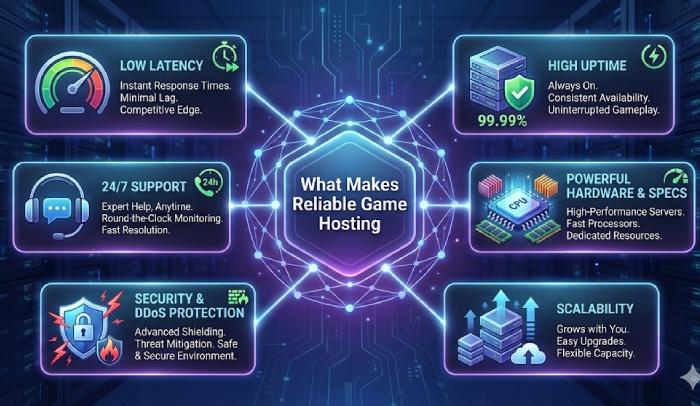
When people search for “reliable game hosting”, they usually have specific situations in mind:
- Hosting a private Minecraft server for 10–20 friends without random lag spikes.
- Running a fast‑paced shooter or survival server where every millisecond of delay can cost a match.
- Scaling a growing community from a small clan server to hundreds of concurrent players without wipes or crashes.
- Understanding these real‑world use cases makes it easier to choose hosting that actually fits what your players expect in‑game.
Table of Contents
The Importance of Low Latency
In fast-paced online games, latency — the delay between a player’s action and the server’s response — is crucial. Even milliseconds can influence competitive outcomes and player satisfaction.
High latency (often called “lag”) disrupts gameplay, causing delayed responses, stutters, and unfair conditions. Reliable hosting uses powerful servers, high-bandwidth networks, and geographically distributed data centers to keep latency low by minimizing distance and routing inefficiencies for players.
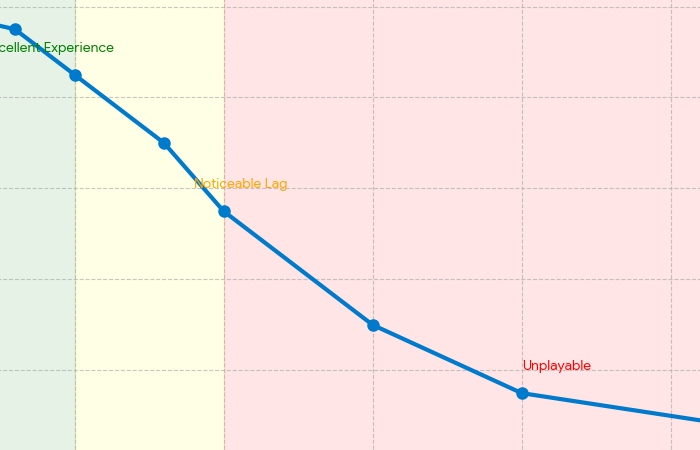
As a practical benchmark, competitive players generally aim for ping under 50 ms, and anything consistently above 100 ms starts to feel sluggish in shooters, MOBAs, and battle‑royale titles. For casual or co‑op servers, slightly higher latency can be acceptable, but large spikes or unstable connections still cause disconnects and rubber‑banding that push players away.
Server Stability and Uptime
Server stability determines whether your game stays online consistently. In the heat of an epic showdown, the last thing any player wants is to be yanked from the action by a sudden disconnect caused by server instability.
Frequent crashes, disconnections, or prolonged downtime erode player trust and damage a game’s reputation.
Top-tier hosts use redundant systems, failover architectures, and proactive monitoring to ensure uptime close to industry standards (often ~99.9% or higher), In practical terms, 99.9% uptime still allows for roughly 43 minutes of unplanned downtime per month, while 99.99% cuts that to just a few minutes. For always‑on communities and monetized servers, aiming for the higher end of this range (99.95–99.99%) can significantly reduce rage‑quits during peak hours. meaning players can rely on the game being available when they want to play.
Performance and Hardware Specifications
People choosing game hosting care deeply about hardware quality and resource allocation. Good hosts provide high-performance CPUs, sufficient RAM, fast SSD or NVMe storage, and robust network bandwidth — all of which directly affect responsiveness, load times, and overall player experience. Assessing providers by these specs ensures your server can support your game’s demands.
As a rough guide, small Minecraft or survival servers (up to ~10–20 players) typically run well on 2–4 vCPU and 4–8 GB RAM, while larger modded or high‑tick‑rate servers may need 6–8+ vCPU and 16+ GB RAM. Choosing NVMe SSD over HDD for world data and databases also helps keep chunk loading, map changes, and save operations smooth under load.
Scalability for Growing Communities
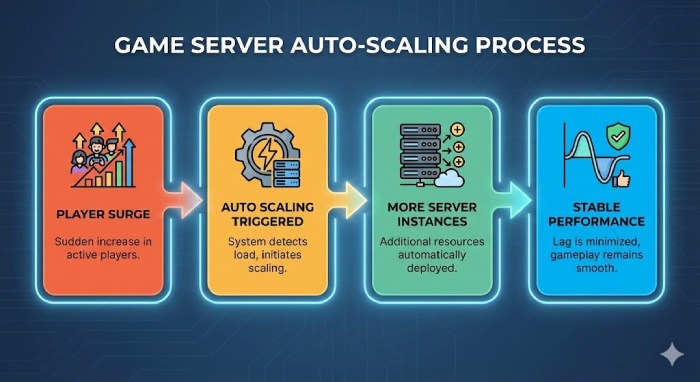
A game’s popularity can surge due to updates, new content, or viral trends. Hosting must scale resources — both vertically (more CPU/RAM) and horizontally (additional instances) — without performance loss. Elastic scaling enables multiplayer environments to handle sudden traffic spikes or large events without lag or crashes.
Security and Protection from DDoS Attacks
Gaming servers are frequent targets for cyberattacks, particularly Distributed Denial of Service (DDoS) attacks that flood servers with malicious traffic. Reliable hosts include built-in firewalls, network-level filtering, real-time threat detection, and DDoS mitigation to protect server availability and player data.
Support, Maintenance, and Monitoring
Searchers also look for responsive customer support and proactive server monitoring — not just hardware specs. Quality hosts offer 24/7 support via multiple channels, automated alerts for performance issues, and regular updates or maintenance. This ensures issues are resolved quickly, minimizing downtime and maintaining player satisfaction.
Customization and Mod Support
Many online games thrive on community-driven content and modifications. A flexible hosting provider allows administrators to install mods, adjust server settings, manage plugins, and fine-tune the gameplay environment. This level of control enhances engagement and extends a game’s lifespan.
For example, those looking for Minecraft hosting need a provider that supports plugins, custom maps, and other enhancements without compromising server stability.
Cost Considerations and Value
Cost is a real concern for many searchers. People want hosting that works within their budget without sacrificing quality or essential features. Evaluating pricing alongside performance, support, and long-term value helps developers and communities find hosting that fits both needs and budget. WeWP
Table Example:
| Pricing Tier | Best For | Typical Price | Includes |
|---|---|---|---|
| Basic | Small groups | $5–$15/month | VPS resources |
| Standard | Mid games | $20–$50/month | Better performance |
| Premium | Large games | $80+/month | Dedicated CPU/Support |
Dedicated vs. Shared vs. VPS Hosting Options
Depending on your game’s scale, you might choose:
-
Dedicated servers — exclusive hardware resources for high traffic and premium performance.
-
Gaming VPS hosting — a balance of control and affordability with customizable resources.
-
Cloud or hybrid models — flexible scaling for variable player loads.
Each option has trade-offs in cost, control, and performance, so understanding your community’s needs helps you decide the best fit.
Example:
| Feature | Dedicated | VPS | Cloud |
|---|---|---|---|
| Control | High | Medium | High |
| Cost | Higher | Mid | Flexible |
| Scalability | Moderate | Moderate | High |
| Performance | Very High | High | Variable |
| Best For | Large games | Mid-sized | Growing / dynamic |
For most hobby or small‑community projects, a VPS or cloud instance is usually enough and keeps costs predictable while still offering good performance. Large public servers, monetized networks, or esports communities benefit more from dedicated or high‑end cloud setups, where guaranteed resources and stronger uptime SLAs justify the higher monthly fee.
The Long-Term Impact of Hosting Quality
Poor hosting doesn’t just frustrate players—it can drive them away permanently. Lag, disconnections, and security vulnerabilities create an unreliable experience, leading players to seek better alternatives. On the other hand, a well-hosted game fosters loyalty, encourages community growth, and maximizes monetization opportunities.
For developers and gaming communities alike, investing in high-quality hosting isn’t just a technical decision—it’s a strategic one. Choosing the right hosting provider ensures that players stay engaged, enjoy uninterrupted gameplay, and keep coming back for more.
Conclusion
Reliable game hosting is foundational to the success of any online title. It influences latency, uptime, hardware performance, security, support, scalability, and cost — all factors searchers actively consider when looking for hosting solutions.
A well-chosen host ensures smooth, responsive gameplay and builds trust, while poor hosting leads to lag, interruptions, and disengaged players. For developers and communities alike, investing in high-quality hosting is essential to sustain growth, maximize engagement, and cultivate long-term success.
Key FAQs
1. Why does low latency matter in online gaming?
Low latency ensures player actions are reflected in real time, which is crucial for fairness and responsiveness in competitive and cooperative gameplay. High latency (lag) can disrupt experience and frustrate players.
2. What uptime should I expect from a reliable game hosting provider?
Industry standards target at least 99.9% uptime, meaning servers are available nearly all the time, minimizing disruptive downtime for players.
3. How does hosting help protect against DDoS attacks?
Good hosting includes DDoS mitigation tools, firewalls, and network monitoring that detect and block malicious traffic, keeping servers online during attack attempts.
4. What hardware specs should I look for in game hosting?
Look for multi-core CPUs, ample RAM, fast SSD or NVMe storage, and high network bandwidth to support smooth data processing and minimal lag. prolimehost.com
5. Is support important for hosted game servers?
Yes — responsive 24/7 support and proactive monitoring help resolve issues quickly and maintain server stability, enhancing player trust.
Game Hosting Providers — Feature Comparison
Different providers tend to specialize in slightly different strengths rather than offering identical “best for everything” plans:
-
Shockbyte – Known for very low entry pricing and strong support for Minecraft and other sandbox titles, with DDoS protection and instant setup for budget‑conscious players.
-
Hostinger – Stands out for affordable VPS‑based game hosting and a strong uptime guarantee, making it attractive for users who want more control without high dedicated‑server costs.
-
Host Havoc – Often recommended for its fast, responsive support and wide game library, making it a good fit for communities that host multiple titles.
-
Apex Hosting – Focuses heavily on Minecraft, with one‑click modpack installs and managed setups that appeal to players who want convenience over manual configuration.
-
ScalaCube – Popular for easy setup and strong customization options, especially around multiple Minecraft instances and modded environments.
Calling out these strengths directly helps readers quickly match a provider to their budget, game type, and level of technical expertise.
| Provider | Starting Price | Latency & Performance | Uptime Guarantee | DDoS Security | Scalability | Support & Extras |
|---|---|---|---|---|---|---|
| AccuWeb Hosting | ~$4.99/mo | High — optimized for low lag | Standard market uptime | Advanced included | Good (many games) | Mod support, free backups |
| Hostinger | ~$4.99/mo | Good performance | 100% uptime guarantee | Yes | Good | Round-the-clock support |
| Host Havoc | ~$3.75/mo | Strong low-latency options | ~99.9%+ | Included | Scalable plans | 24/7 support, mod tools |
| Shockbyte | ~$2.99/mo | Good performance | 100% uptime | Yes | Supports mods & upgrades | 24/7 support, global locations |
| Apex Hosting | Varies by game | Good, Minecraft focus | Standard uptime | Good protection | Easy mod installs | One-click mod packs |
| ScalaCube | Varies by game | Suitable for small servers | Standard uptime | Basic included | Good for Minecraft | Focus on easy setup |