
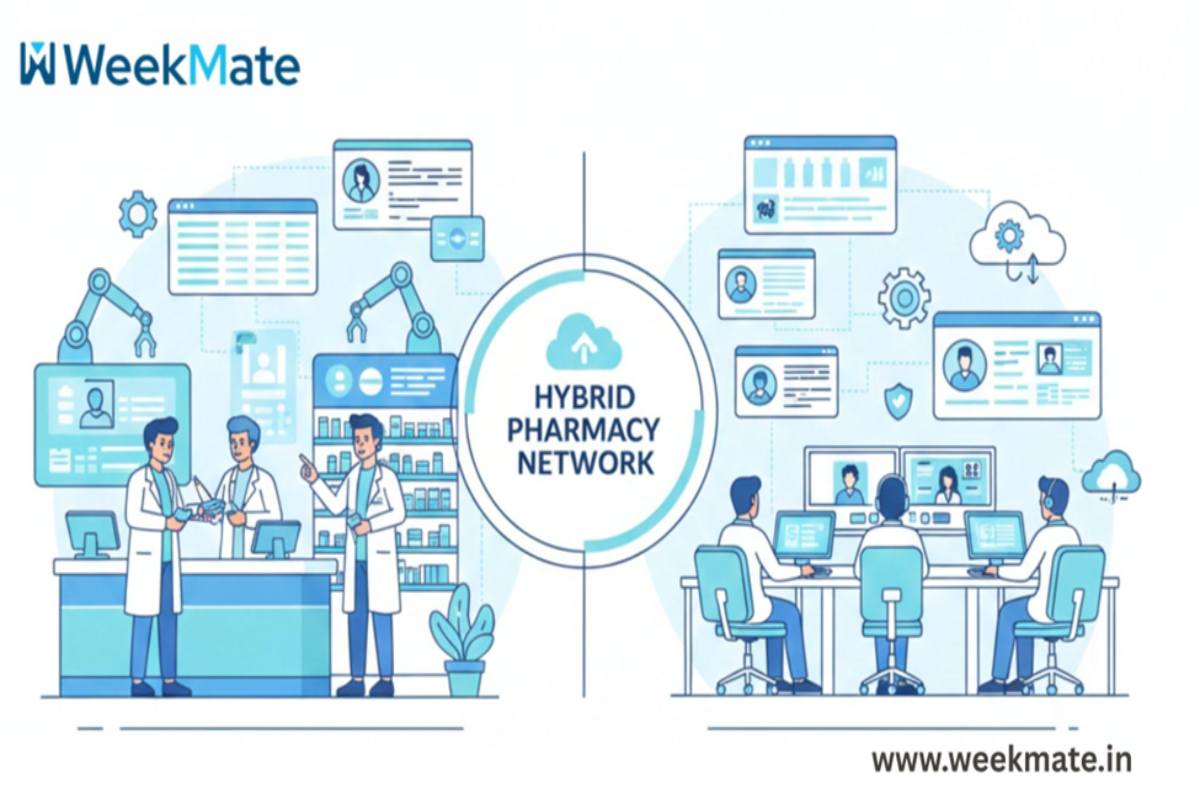
Pharmacy operations are quietly but significantly changing. Pharmacies, once characterized by fixed shifts and on-site roles, are gradually shifting to hybrid and flexible workforce models. Staff shortages, rising operational costs, regulatory complexity, and the desire for work-life balance in healthcare roles have all contributed to this change.
Figuring out this new reality is not easy. Pharmacy leaders need to juggle pharmacists, technicians, and administrative staff who are on different schedules, working in different places, and are subject to different compliance requirements all this without sufficient insight and using legacy systems. Consequently, workforce inefficiencies directly impact patient care, safety, and profitability.
This is the reason why pharmacy workforce management software and modern healthcare workforce management solutions have become a must-have rather than an option. Digital platforms that integrate scheduling, attendance, payroll, and compliance enable pharmacies to operate accurately even in a hybrid setup. Additionally, by combining HRMS payroll software, automated pharmacy systems, and HR workflow automation, pharmacies gain the operational transparency needed for success.
Table of Contents
Understanding Hybrid and Flexible Pharmacy Workforces
Hybrid and flexible work in a pharmacy typically refers to adaptive staffing models in which some roles or responsibilities are shared across locations or times, rather than to fully remote pharmacy operations, which hybrid and flexible work does not imply. Pharmacists can travel between branches, technicians can work shifts, and administrative or billing staff may work from home on some days.
Flexible scheduling is especially beneficial for:
- Practicing pharmacists with clinical and managerial responsibilities
- Pharmacy technicians supporting peak-hour dispensing
- Administrative groups to perform payroll, inventory and compliance
That said, dual on-premises and distributed teams are more complex to manage. In the absence of centralized supervision, production may falter, compliance risks may rise, and pockets of communication voids may form. In healthcare, these are not just problems of efficiency they’re problems of patient safety and patient trust.
Key Challenges in Pharmacy Workforce Management
Many pharmacies still use manual or semi-digital systems for workforce management. It was fine for small setups, but such systems are no longer able to meet modern demands.
Common problems include scheduling conflicts that lead to understaffing or overwork, payroll errors caused by incorrect time tracking, and limited visibility across locations. Issues such as time theft and “buddy punching” persist when attendance systems are manual or outdated.
Moreover, compliance is a major issue. Pharmacies must comply with healthcare labour regulations, licensing requirements, and audit standards. If HR data is scattered all over various spreadsheets and disconnected tools, ensuring compliance is not only a challenge but also a risk. Manually handling these issues can be exhausting, especially when HR workflow automation is lacking, and managers are forced to rely on email and paperwork to obtain approvals and create documentation.
Role of Technology in Modern Pharmacy Workforce Management
Pharmacy workforce solutions of the past did not anticipate today’s hybrid healthcare settings. Therefore, they are missing out on real-time visibility, automation, and scalability. When pharmacies operate across multiple locations or adopt a flexible staffing model, these limitations can create bottlenecks in operations.
A contemporary pharmacy automation platform addresses these issues by centralizing a pharmacy’s entire workforce operations within a single digital ecosystem. It’s well known that advanced pharmacy operations software integrates scheduling, attendance, payroll, and compliance with clinical workflows. They find it easy to make staffing decisions aligned with prescription volume, peak hours, and patient demand.
Cloud-based SaaS pharmacy solutions play a very crucial role. Among other things, they enable managers to access workforce data anytime, from anywhere; standardise processes across locations; and scale operations without significant IT investments. In fact, these pharmacies gain both agility and control when, in addition to these advantages, they have a robust pharmacy workflow solution.
According to the 2024 report by the International Pharmaceutical Federation, more than 60% of pharmacies worldwide are facing staff shortages, making flexible scheduling and digital workforce tools increasingly important.
Best Practices for Managing Hybrid and Flexible Pharmacy Teams
Centralize Workforce Operations
Centralization is the foundation of a well-managed hybrid workforce. With pharmacy workforce management software, pharmacies can manage not only their schedules but also roles and shift allocations through a single interface. Such a way of working, by doing away with silos, brings uniformity across locations.
Unified dashboards deliver real-time information on staffing levels, attendance, and compliance status. This kind of insight is essential for multi-location pharmacies to maintain a high level of service while meeting regulatory requirements.
Automate Scheduling and Shift Management
Scheduling by hand is error-prone and inefficient. Automation allows the pharmacy to align its staffing with prescription demand, preventing understaffing or overwork.
Key benefits include:
- Intelligent scheduling for peak dispensing hours
- Shift swap requests and approvals in real-time
- Full integration with automated pharmacy systems
This level of automation can support flexible work schedules and work-life balance for nurses without affecting patient care.
Implement Digital Attendance Tracking
Ensuring accurate attendance tracking is essential for payroll accuracy and compliance. A digital attendance system for pharmacies eliminates manual attendance registers and the issues associated with biometric systems by providing real-time, location-aware tracking.
For chains and franchises, attendance solutions for multi-location pharmacies from a single central point, while local managers maintain daily operations for their teams. It helps reduce time theft, increase accountability, and enhance team trust.
Streamline Payroll and HR Processes
Payroll errors are a major reason employees become unhappy. HRMS payroll software that integrates with attendance and scheduling systems enables accurate salary calculations, overtime tracking, and compliance with applicable laws.
Automating leave management, approval workflows, and filing reduces the paperwork burden significantly. With HR workflow automation, managers can spend less time on administrative work and more on operational strategy and quality of care.
Enable Data-Driven Workforce Decisions
Workforce data becomes a valuable asset when it is used effectively. Features such as advanced analytics embedded in healthcare workforce management solutions enable pharmacies to plan future staffing needs, identify low-performing areas, and manage labor costs efficiently.
By analyzing patterns in prescription volume, absenteeism levels, and overtime, pharmacies can make decisions that maintain a balanced approach to productivity, compliance, and staff well-being.
Finding the Best Solution for Pharmacy Workforce Management
Choosing the best pharmacy management system is a long process and should be based on different factors:
- Evaluate cloud accessibility for remote access, real-time updates, and, if applicable, use within physical or hybrid pharmacy operations.
- Plan for scalability to support business growth, company acquisitions, and increasing workforce demand.
- Focus on data security and healthcare compliance (i.e., the platform is compliant with applicable regulations & standards for audits).
- Consider SaaS pharmacy systems to enable faster implementation, easier upgrades, and lower upfront infrastructure costs.
- Ensure you can integrate with clinical, dispensing, and your existing pharmacy systems to work efficiently.
Opt for platforms that meet the needs of hybrid teams, such as Weekmate workforce management, by integrating scheduling, attendance, payroll, and compliance needs into one operational platform
This strategy ensures operational consistency, visibility, and seamless workforce management across retail and virtual pharmacy environments.
Advantages of the Pharmacy Workforce Management Solution
A unified pharmacy workforce management solution offers measurable and enterprise-wide advantages:
- Improved efficiency of operations through the removal of manual work related to scheduling, attendance monitoring, and payroll running
- More transparency and flexibility in the workforce to allow employees to have a better understanding of their schedules, shifts and work duties
- Greater employee satisfaction and retention as a result of accurate payroll, equitable scheduling, and simplified HR interactions
- Minimized compliance risk with standardized workflows, centralized data, and audit-ready documentation
- Better patient service when staff levels are more closely matched to prescription volume and busy service periods
- Decreased administrative burden, enabling managers to focus on strategic and patient-facing initiatives.
A 2024 Deloitte healthcare operations study found that organizations with integrated workforce management platforms reduced administrative burden by up to 30% and improved compliance accuracy.
Future Trends in Pharmacy Workforce Management
Pharmacy workforce management will increasingly rely on data. AI-powered scheduling software can determine the number of staff needed by analyzing historical data and the current situation. A closer integration between workforce systems and pharmacy workflow solutions will significantly improve operational efficiency.
Flexible work arrangements are likely to become a standard feature of healthcare, with digital-first operations emerging as the norm rather than the exception. Pharmacies will be able to effectively balance employee wellness with patient safety through automated, intelligent platforms.
Bottom Line
Managing hybrid and flexible pharmacy workforces is not just about policy changes; it is about digitally transforming workforce operations. Modern pharmacy environments cannot do without centralization, automation, precise attendance tracking, and data-driven decision-making.
Technology is a major enabler of change. Pharmacies that use modern pharmacy workforce management software, healthcare workforce management solutions, and integrated automation tools can operate at their best while accommodating flexible working arrangements.
WeekMate is one of the solutions that demonstrate how a unified workforce platform helps pharmacies reduce complexity, stay compliant, and consistently deliver patient care in a changing healthcare sector.
FAQs
1. What is pharmacy workforce management software?
Pharmacy workforce management software is a cloud-based solution that streamlines employee scheduling, time-and-attendance data collection, payroll reporting, and pharmacy-specific compliance in one system. It accommodates hybrid and flex working models by digitizing manual processes and enhancing operational insight.
2. Why do pharmacies require workforce management software?
Pharmacies have complex staffing requirements and are increasingly subject to regulations. Automation of scheduling, attendance, payroll, and compliance through workforce management software reduces errors and administrative workload. Platforms such as WeekMate integrate a healthcare workforce management solution with pharmacy-specific workflows.
3. How is HR workflow automation good for pharmacy operations?
HR workflow automation eliminates repetitive, time-consuming administrative tasks, such as leave approvals, shift changes, and payroll processing. By using WeekMate, pharmacies increase accuracy, efficiency, and compliance while freeing those managing them to focus on patient care.
4. What are the benefits of using a digital attendance system for multi-site pharmacies?
Digital attendance for pharmacies provides real-time staff attendance records across all stores. It prevents time theft, improves payroll accuracy, and enables remote workforce monitoring ideal for hybrid work environments.
5. What are the benefits of HRMS payroll software in pharmacy?
HRMS payroll software provides accurate salary calculations, handles overtime, and ensures compliance with taxes and timely payments. When combined with attendance and scheduling software, it increases both payroll accuracy and employee satisfaction.