
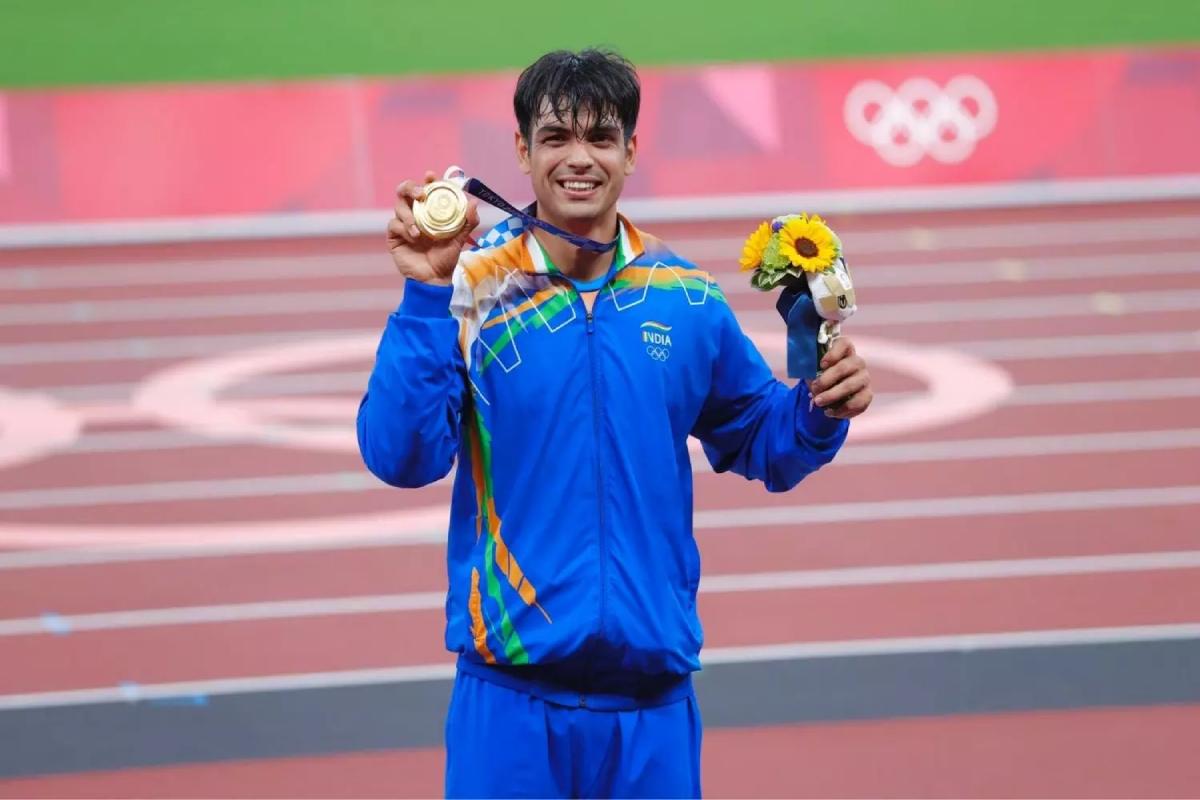
Neeraj Chopra’s Olympic gold in Tokyo 2020 did more than add a medal to India’s tally: it changed what Indian athletes believe is possible in track and field. That single moment created a new baseline of ambition, where winning is no longer a distant fantasy but a realistic target—especially as India heads into Paris with its biggest-ever athletics presence and a deeper pipeline of contenders.
Table of Contents
India’s Olympic Momentum: Building on the Legacy of Neeraj Chopra – Quick Answer
India’s Olympic momentum is growing because Neeraj Chopra’s Tokyo 2020 breakthrough has turned belief into broader qualification and stronger depth. With 29 athletes in Paris, plus proven results in javelin and emerging strength in events like steeplechase, relays, and race walking, the next step is converting more finals-level performances into medals across multiple disciplines.
Why Chopra’s Tokyo 2020 gold changed the psychology of Indian athletics
Chopra delivered India’s first Olympic gold medal in athletics in the men’s javelin throw, and that “first” matters. It created a proof point that Indian athletes can win in events traditionally dominated by countries with long track-and-field histories. The shift is visible in how athletes now talk about targets: finals, podiums, and personal bests are framed as expectations rather than hopes.
This is the core of momentum: confidence that survives pressure.
A single champion cannot carry a nation forever, but a single champion can reset the culture—especially for younger athletes who grew up watching that Tokyo final and now train with a clearer picture of what elite performance looks like.
Paris 2024: a bigger Indian athletics squad and what it signals
India will send 29 athletes to the Paris Olympic Games, the most-ever for the country in the quadrennial event. That number is not just trivia; it reflects a broader base of qualification-level performances and a more competitive domestic environment. It also means India’s athletics squad is, for the first time, the largest within the Indian contingent—an important marker that track and field is no longer a side story in India’s Olympic planning.
Adille Sumariwalla has argued that even if India does not win a medal in Paris, visible and appreciable improvement will still be evident. For beginners trying to understand Olympic progress, this is a useful lens: medals are the headline, but performance depth—more qualifiers, more finalists, tighter personal-best ranges—is what sustains medals over multiple Olympic cycles.
Momentum is easiest to lose when expectations jump faster than systems. Paris is therefore a test of process as much as outcome.
Neeraj Chopra after Tokyo: consistency, titles, and the 90m chase
Since Tokyo, Chopra has built a champion’s portfolio: he has won silver and gold medals at the World Championships, claimed gold at the Diamond League Final in 2023, and won gold at the Asian Games in Hangzhou. For a beginner, these titles matter because they show repeatability across different competition formats—championship rounds, one-day meets, and multi-stage circuits.
His career also shows the less glamorous side of elite sport. At 26, Chopra has dealt with injuries that slowed his progress and delayed the day he crosses the 90m mark, a distance that functions like a psychological barrier in javelin. He threw a personal best of 89.94m in Stockholm in 2022, then recorded a season best of 88.88m in October 2023 at Hangzhou.
In 2024, he arrived in Paris after recovering from a niggle and competed only at the Paavo Nurmi Games in Turku, Finland, winning gold with 85.97m. That “modest” winning mark is a reminder that limited-competition phases are often about rhythm and health, not maximum distance every time.
Depth behind the star: why javelin is now a genuine Indian strength
India’s javelin story is no longer a one-man narrative. At the World Championship 2023 in Budapest, three Indians finished in the top 10 of the men’s javelin throw. That kind of clustering is how a country becomes a force: it creates internal competition, raises qualifying standards, and reduces dependence on a single athlete’s form.
Kishore Kumar Jena is central to this depth. The athlete from Odisha won silver at Hangzhou behind Chopra and owns a personal best of 87.54m. For beginners, the key takeaway is how close this is to the global elite range: it positions India to have multiple finalists, which increases medal probability and strengthens team confidence in major championships.
Even casual fans can feel the difference when two Indians enter a final with realistic podium potential.
Other Indian events to watch: steeplechase, shot put, relays, and race walking
Chopra may lead the charge, but India’s Paris hopes extend across disciplines. Avinash Sable, the national record holder in the men’s 3000m steeplechase, represents India’s push into endurance events that demand tactical awareness and repeated high-intensity efforts. In field events, shot putter Tajinderpal Singh Toor brings the credibility of being an Asian record holder, a label that signals dominance at continental level and the potential to translate that into global competitiveness.
The men’s 4x400m relay team is another storyline beginners should understand. Relay success is rarely accidental: it depends on a pool of quarter-milers, baton skills, and the ability to run under pressure in heats and finals. India’s men pushed the United States hard in heats at the World Relays 2024 in the Bahamas, a performance that hints at improved speed and execution when it matters.
Race walking adds further breadth. Four Indian race walkers—two men and two women—have qualified, giving India representation in both sections. That balance matters because it spreads medal opportunities across more events and builds a more complete athletics programme.
A beginner’s checklist for understanding momentum in Olympic athletics
- More qualifiers: 29 athletes in Paris shows a wider base of Olympic-level performances.
- More depth in one event: three Indians in the top 10 in Budapest 2023 shows javelin is becoming a system, not a one-off.
- More event variety: javelin, steeplechase, shot put, relays, and race walking reduce reliance on a single medal path.
- More repeatable winning: Chopra’s World Championships medals and 2023 Diamond League Final gold show consistency across formats.
The fan factor: why viewership and media distribution now matter more
Olympic momentum is not only built on the track; it is also built in living rooms and on phones. During Tokyo, the Olympics reached over 3 billion people despite pandemic-era limitations, proving that global attention can remain massive even without full in-person crowds. For India, the scale of interest is especially important because it drives sponsorship confidence, athlete visibility, and long-term investment in training environments.
One striking indicator of India’s engagement is that Chopra’s gold-winning javelin throw in Tokyo 2020 generated about 60 million views from India on the IOC’s platform. That kind of concentrated attention around a single athletics moment is rare, and it helps explain why athletics has gained a new place in India’s mainstream sports conversation.
Paris also arrives with stronger distribution planning. India has a new partnership with broadcasters Viacom18 and their wide network spanning TV and digital platforms, which supports broader access for first-time Olympic viewers. In practical terms, this means more people can follow heats, qualification rounds, and field-event finals—exactly the coverage that helps beginners learn how Olympic athletics actually unfolds.
It is also why sports conversations increasingly overlap with entertainment habits, including casual discussions on platforms like bc game where fans track form and outcomes in real time.
Commercial strength and partnership models: the funding engine behind the Games
The Olympics are powered by a commercial ecosystem that ultimately supports athletes and federations. The IOC’s TOP programme, launched in 1985, grew from about $96 million in revenues in the 1985–88 cycle to $2,295 million in the 2017–2021 cycle. For beginners, the relevance is straightforward: bigger, stable commercial programmes help keep the Olympic movement funded and help deliver the Games at scale.
Tokyo 2020 generated $0.5 billion in TOP sponsorship revenues and over $3 billion in domestic partnership. The TOP roster has remained similar heading into Paris, with Deloitte added as a partner announced in 2022, taking the number of TOP partners to 14. This stability matters because it reduces uncertainty and allows organisers and broadcasters to plan long-term fan experiences and athlete storytelling.
TOP partnerships are also described as “partnership with purpose,” extending beyond money into areas like sustainability, gender equality, diversity, women’s empowerment, and mental health. While these themes can sound abstract, they shape the environment athletes compete in and the support structures available during high-pressure Olympic cycles.
Turning legacy into medals: what India needs to do next
Legacy becomes momentum only when it is converted into habits: better training, smarter competition schedules, and stronger domestic standards. Chopra’s career offers a template—world-level titles, careful management of injuries, and a steady pursuit of performance milestones like 90m. India’s broader squad now needs similar templates across events: steeplechasers learning championship pacing, relay runners mastering baton exchanges under fatigue, and race walkers building consistency across international circuits.
Paris will reward countries that combine belief with execution. India already has the belief—Tokyo proved that.
The next step is making “visible and appreciable improvement” show up in the places that change Olympic history: more finalists, more personal bests on the big day, and more athletes who arrive expecting to contend rather than participate.
What to watch in Paris if you’re new to athletics?
- Qualification rounds: field events like javelin can be won or lost before the final if athletes struggle to find rhythm.
- Consistency under pressure: medals often go to athletes who reproduce near-best throws or times when it matters most.
- Depth indicators: multiple Indians in the same final is a sign the programme is strengthening, not just one athlete peaking.
- Relay execution: clean baton changes can beat faster teams that make mistakes.
- Health management: limited pre-Olympic competitions, like Chopra’s 2024 build-up, can be strategic rather than risky.
India’s athletics story is now big enough to be followed event by event, not just medal by medal. That is the real legacy of Neeraj Chopra: he made Indian fans care about the process, and he made Indian athletes believe the process can end at the top of the podium.
FAQ
Q: What does “momentum” mean in an Olympic athletics context?
A: It means more athletes qualifying, more finalists, and more consistent high-level performances across events, not just one standout medal.
Q: Why is Neeraj Chopra’s Tokyo 2020 gold seen as a culture shift?
A: It was India’s first Olympic gold in athletics, and it made winning in track and field feel achievable for a wider group of Indian athletes.
Q: Which numbers best summarise Chopra’s level since Tokyo?
A: His personal best is 89.94m (Stockholm 2022), his 2023 season best was 88.88m (Hangzhou), and he won the Paavo Nurmi Games 2024 with 85.97m after a niggle.
Q: What is the clearest sign India has javelin depth beyond one athlete?
A: Three Indians placed in the top 10 at the World Championship 2023 in Budapest, and Kishore Kumar Jena has an 87.54m personal best plus an Asian Games silver behind Chopra.
Q: Why do broadcasting and sponsorship matter for India’s Olympic growth?
A: Wider coverage helps more fans follow full competitions, while stable commercial programmes help fund the Games and strengthen the ecosystem that supports athletes.