
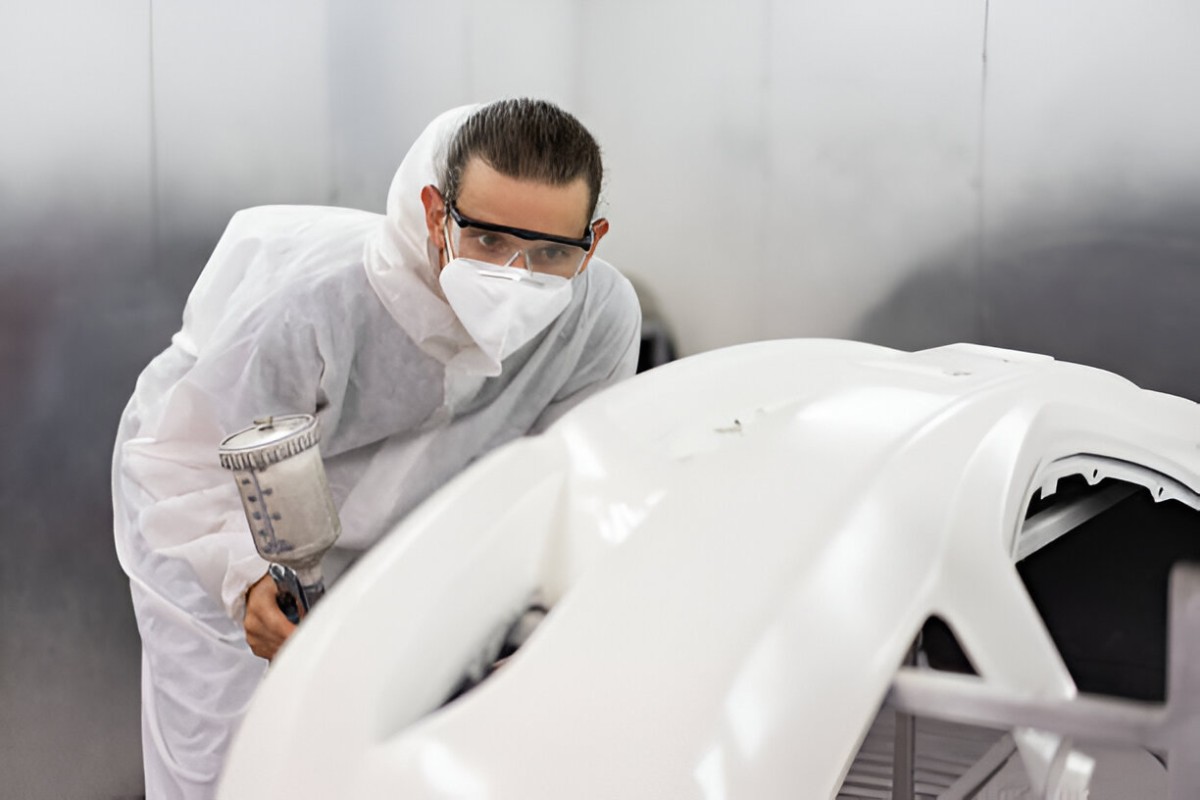
In industry today, materials must withstand extreme conditions while maintaining performance and longevity. Advanced coatings have emerged as a critical technology in enhancing the durability, efficiency, and functionality of various surfaces. These coatings leverage cutting-edge material science innovations, particularly in polymer innovations, to deliver high-performance solutions across multiple industries. Read on to learn everything you need to know.
Table of Contents
The Science Behind Advanced Coatings
Advanced coatings are engineered surface treatments designed to enhance properties such as corrosion resistance, thermal stability, electrical conductivity, and hydrophobicity. These coatings are developed through a combination of nanotechnology, chemistry, and material science. They often integrate polymers, ceramics, and metal-based compounds to achieve desired characteristics.
One of the key advancements in coating technology is the use of nano-coatings. These coatings employ nanoparticles to create ultra-thin, high-performance layers that improve resistance to wear, moisture, and environmental degradation. Additionally, self-healing coatings have been developed using microencapsulated polymers that release repairing agents when the surface is scratched or damaged.
Polymer-based coatings, in particular, have seen significant improvements. Innovations in polymer chemistry have led to the development of coatings that provide enhanced adhesion, flexibility, and resistance to chemicals. These materials are now being widely used in various industrial applications to improve performance and longevity. For more insights into cutting-edge polymer innovations, you should check out trusted industry suppliers.
Industrial Applications of Advanced Coatings
1. Aerospace and Automotive Industries
Advanced coatings are crucial in aerospace and automotive applications, where materials are exposed to extreme temperatures, friction, and corrosive environments. Thermal barrier coatings (TBCs) are used to protect engine components, while hydrophobic coatings enhance aerodynamics and fuel efficiency.
According to NASA’s research on thermal barrier coatings, these ceramic layers significantly increase gas temperatures while reducing cooling requirements, directly improving engine fuel efficiency and reliability.
In practical applications, yttria-stabilized zirconia coatings have shown to reduce specific fuel consumption while decreasing thermal stress on critical components like piston heads and cylinder liners. For commercial aircraft, the drag reduction from hydrophobic coatings translates to measurable fuel savings over time.
Thermal barrier coatings (TBCs) reduce engine temperature by up to 180°C (324°F), extending component life by 5-10 years while improving fuel efficiency by 2-5%. Hydrophobic coatings on aircraft reduce drag coefficient by 3-8%, lowering fuel consumption by $100,000+ annually on commercial aircraft.
2. Medical and Healthcare Sector
The medical industry benefits significantly from antimicrobial and biocompatible coatings. These coatings are applied to medical devices, implants, and surgical tools to prevent bacterial growth and improve patient safety. Moreover, drug-delivery coatings are being developed to release medications in a controlled manner.
The antimicrobial coatings market for medical devices reached $11.39 billion in 2023 and is projected to grow at 13.9% annually through 2035 according to Grand View Research. Medical device applications dominated with nearly 40% market share, driven by demand in catheters, implants, and surgical instruments. These coatings have proven particularly effective in reducing infection rates, with silver-based formulations showing strong biocompatibility and proven microbial control as detailed by Precedence Research.
3. Electronics and Semiconductor Industry
With the miniaturization of electronic components, protective coatings play a vital role in ensuring longevity and reliability. Conformal coatings are used on circuit boards to prevent moisture damage and corrosion, while conductive coatings are applied to enhance electrical performance in devices.
Conformal coatings serve as a critical moisture barrier in humid environments, preventing oxidation of metal parts and corrosion of solder joints according to PCB protection specialists. In mission-critical systems like aerospace control units and telecommunications networks, these coatings extend PCB operational life by protecting against condensation, ionic contamination, and mechanical stress from temperature fluctuations. This protection is essential as electronics continue to miniaturize and operate in increasingly harsh conditions.
4. Construction and Infrastructure
The construction industry utilizes advanced coatings to enhance the durability of buildings, bridges, and infrastructure. Anti-corrosion coatings protect metal structures from rust, while self-cleaning coatings reduce maintenance costs by repelling dirt and contaminants.
Anti-corrosion coatings can extend the lifespan of steel bridges by up to 100 years while significantly reducing maintenance costs according to Evonik’s corrosion protection data. For reinforced concrete structures in particular, protective systems like Protectosil® stop the corrosion process even in already damaged structures by renewing the steel’s passivation layer. The ASCE’s life-cycle cost analysis confirms that proper coating strategies are more economically beneficial than periodic replacement, especially when considering long-term maintenance schedules.
5. Renewable Energy Sector
Solar panels and wind turbines are exposed to harsh environmental conditions. Advanced coatings improve their efficiency by reducing surface degradation, enhancing UV resistance, and preventing water accumulation. These coatings help to maximize energy output and extend the lifespan of renewable energy systems.
Advanced UV-resistant coatings help solar panels maintain 95% of original efficiency after 25 years of operation, compared to 80% for standard coatings according to research published in Nature. Hydrophilic nano-coatings have shown particular promise, with studies demonstrating they can sustain performance for up to 25 years while uncoated panels lose efficiency much faster. For wind turbines, anti-erosion coatings prevent blade degradation that typically reduces annual energy output by 4-6%.
Market Growth & Future Outlook
The global advanced coating market is projected to grow from $89.7 billion in 2025 to $162.2 billion by 2035, expanding at a 6.1% annual rate according to GMI’s market analysis. This growth is driven by innovations in nanocoatings, self-healing materials, and smart coatings with embedded sensors for real-time performance monitoring. As industries from aerospace to healthcare demand higher performance materials, the development of next-generation coatings will continue to accelerate, particularly in regions like China and India where market growth exceeds 7% annually.
Summing It All Up
Advanced coatings have revolutionized various industries by offering enhanced protection, efficiency, and functionality. With continued advancements in polymer innovations, the development of smart coatings, self-healing materials, and nanotechnology-driven solutions will further expand their applications. As industries continue to demand high-performance materials, the future of advanced coatings remains promising.