
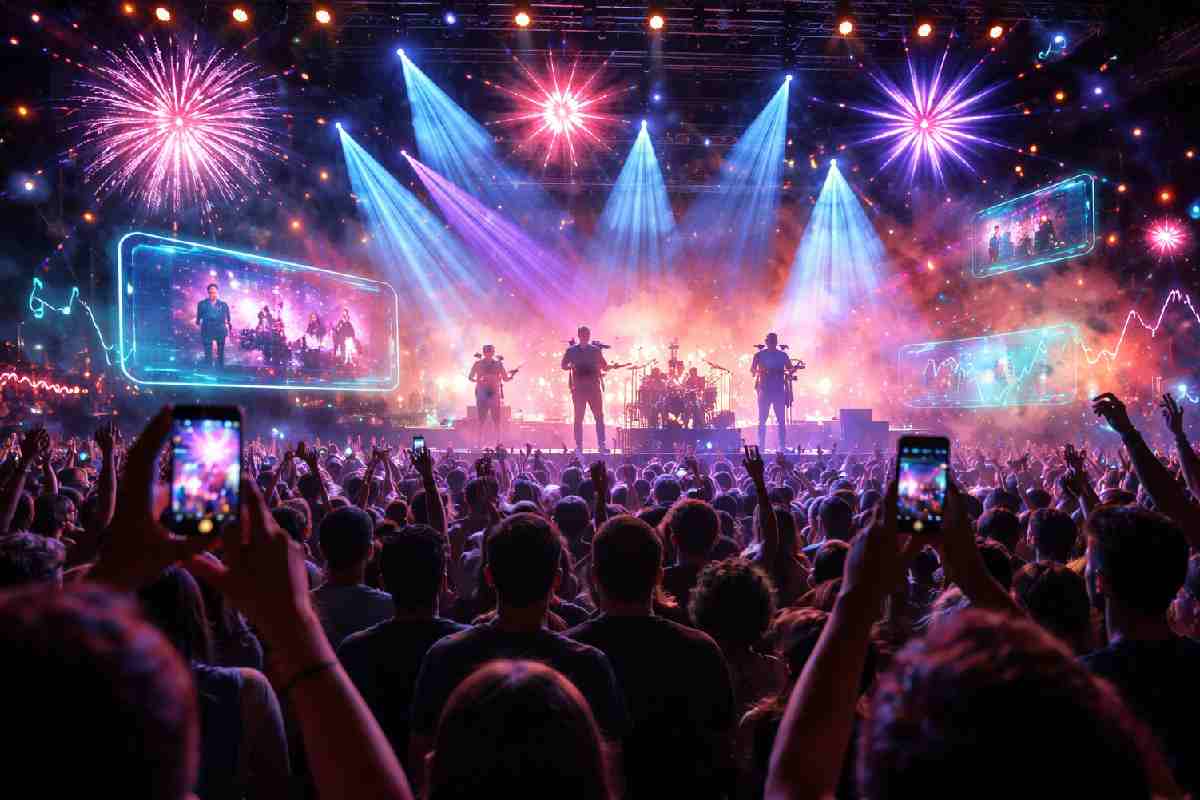
Technology has changed almost everything about how we discover and listen to music, so it’s natural to wonder if augmented reality is next in line to replace concerts themselves. The real story is not about AR killing live music, but about how it’s quietly wrapping itself around the live experience.
Table of Contents
Quick Answer
No. Augmented reality will not kill live music. AR is evolving as a tool to enhance and monetize concerts, not to replace them. It can add digital visuals, accessibility features, and new revenue streams, but it cannot substitute physical sound, shared presence, or the emotional chaos of a real crowd.
Key Takeaways
-
Augmented reality adds digital layers to real‑world concerts; it does not replace them.
-
Live music survives because of physical sound, shared emotion, and social presence.
-
AR is often confused with VR and fully virtual concerts, which serve different purposes.
-
The real risks to live music are poor sound, high costs, weak connection, and over‑screened experiences—not AR itself.
Why People Think AR Could Kill Live Music
People worry about AR because every new technology seems to push us further onto screens. Virtual and “metaverse” concerts exploded during lockdowns, and AR gets lumped into the same bucket. That makes it easy to imagine a future where you stay home in a headset instead of going to a show.
There’s also a basic misunderstanding: many assume AR is a replacement for reality rather than an overlay on it. If you think AR means “the concert happens in your glasses,” the natural follow‑up is, “So do venues and tours still matter?”
Every Technology That Was Supposed to Kill Live Music (And Didn’t)
| Technology | Predicted outcome | What actually happened |
|---|---|---|
| Recorded music | No need to attend concerts | Concerts grew as promotion and status events |
| Radio & TV | Music becomes passive background | Live shows became cultural moments |
| Streaming | Music becomes disposable | Touring became artists’ main income source |
Each wave changed how people discover music, not why they gather in person. AR follows the same pattern: it reshapes the experience around the show, not the basic human desire to be there.
What Augmented Reality Actually Is (And What It Isn’t)
Augmented reality adds digital elements—visuals, information, or interactive layers—on top of the physical world using phones, tablets, or glasses. At a concert, that can mean:
-
Animated 3D visuals around the stage
-
Lyrics or artwork floating in the air when viewed through your phone
-
Extra information about songs, setlists, or site maps
These immersive layers reflect how extended-reality technologies are already applied beyond concerts, as shown in practical examples discussed in discover 5 incredible uses of VR technology.
AR is not:
-
Virtual reality, which replaces your entire environment
-
A standalone virtual concert platform
-
A full substitute for physical attendance
AR needs the real world as its base layer. No venue, no performance, no crowd—no AR concert experience.
How AR Is Enhancing (Not Killing) Live Music
Immersive Visual Layers
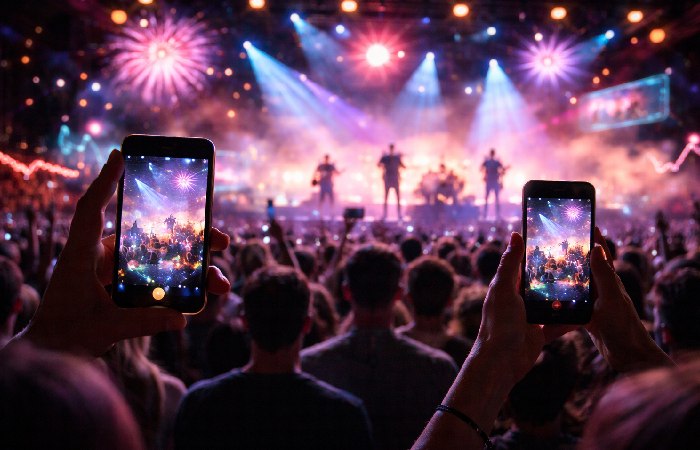
Artists are already using AR to add digital spectacle on top of the stage. Gorillaz, for example, staged “Skinny Ape” performances where giant virtual versions of the band towered over New York and London—fans still gathered physically, but watched the extra layer through their phones. Similar effects show up at festivals, where pointing a phone at the stage can reveal sky‑high avatars or floating 3D art.
These visual and interactive layers reflect wider applications of immersive technology already seen beyond concerts, as highlighted in discover 5 incredible uses of VR technology.
Artists are already using AR to add digital spectacle on top of the stage. Gorillaz, for example, staged “Skinny Ape” augmented-reality performances in New York and London, where fans gathered physically and viewed giant virtual band members through their phones. Similar AR overlays have also appeared at large-scale festivals and branded live events, where mobile-based visuals add digital layers without replacing the live performance.
Increased Accessibility
AR can help people who can’t easily access the front row—or the venue at all:
-
Enhanced overlays for cheaper seats
-
At‑home AR moments that give a taste of the show to fans who can’t travel
-
Early tests with caption overlays, sign‑language avatars, and visualized sound for deaf or hard‑of‑hearing fans
These tools extend the reach of live music rather than replacing it.
Personalised Fan Engagement
Fans can unlock digital “gifts,” unique filters, and collectible art by scanning posters, tickets, or merch. Some artists have used WebAR so fans can scan a tour poster or bottle label to trigger a mini performance or 3D animation, turning everyday objects into interactive touchpoints and boosting merch sales.
New Revenue Streams
For the industry, AR is becoming a strategic asset:
-
Virtual merch, skins, and digital collectibles tied to real tours
-
Premium at‑home tickets with exclusive AR angles or backstage‑style overlays
-
Sponsored AR moments that brands can own without interrupting the set
AR is increasingly used as a premium add‑on around the live show, not a cheaper substitute for it.
What AR Cannot Replace — And Never Will
Despite big tech promises, several core elements keep live music firmly in its own category:
-
Physical energy and sound: The pressure of the bass, the way a kick drum hits your chest, and how sound changes in a real space.
-
Spontaneity: Extended solos, crowd call‑and‑response, last‑minute setlist changes, mistakes that become magic—these unscripted moments are very hard to fake digitally.
-
Communal connection: Sharing a song with thousands of strangers creates a “social electricity” people consistently value over digital alternatives.
-
Embodied presence: Being jostled in a pit, dancing with friends, feeling sweat and air move—none of this exists behind a screen.
These are the main reasons people keep buying tickets even when they can stream the same songs at home.
Why AR Still Won’t “Take Over”: Real Barriers
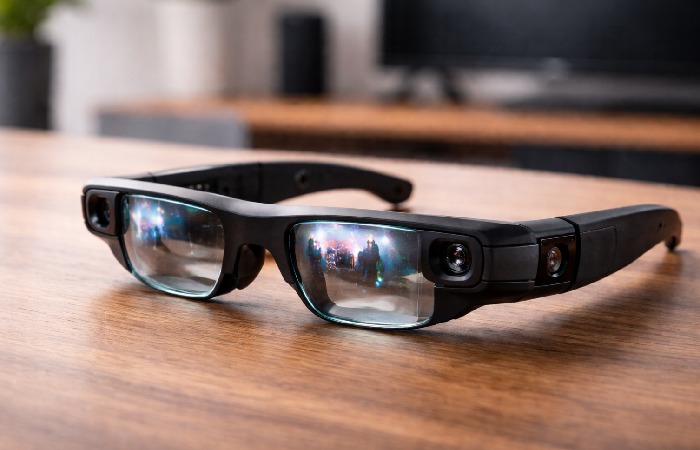
Even as AR improves, there are hard limits that stop it from killing live shows:
-
Smartphone fatigue: Holding a phone up for long stretches is tiring. Most fans only want short AR “moments,” not a full set viewed through a screen.
-
Hardware friction: True glasses-based AR is still expensive and niche because major challenges remain with weight, optics, and battery life, which affect comfort and wearability over long use, as documented in expert discussions of AR hardware design constraints.
-
Production costs: High‑end AR shows with real‑time 3D graphics and tracked cameras are complex and pricey, which limits them to superstar tours and big festivals. Smaller artists often stick to simpler tools like filters or projection mapping.
-
Artist and fan pushback: A growing number of performers experiment with “phone‑light” or “no‑phone” zones because they feel screens dilute emotion and attention.
All of this keeps AR in the role of a special effect, not a full replacement.
The Real Threats to Live Music (Not AR)
If live music suffers, the cause is usually much more basic:
-
Poor sound quality and badly designed rooms
-
Overpriced tickets and unfair fees without clear added value
-
Over‑commercialization and gimmicks that drown out the music
-
Weak artist–fan connection and shows that feel cold or scripted
Technology doesn’t kill live music. Bad experiences do. AR can either support better shows—or become one more distraction—depending on how it’s used.
Sidebox: Simple AR Ideas for Indie Artists
On a budget? You can still use “AR‑like” magic without big‑tour gear.
-
Use projection mapping software (like beginner‑friendly tools or VJ apps) to project reactive visuals onto backdrops, props, or even your clothes.
-
Create a custom Instagram or Snapchat filter so fans see specific effects when they film your set or scan your logo.
-
Turn posters into “living flyers” by linking a QR code or marker to a short performance clip or animated artwork.
-
Run a simple scavenger hunt at the venue using QR codes or GPS points that unlock discount codes or secret tracks.
These tricks give you some of the wow factor of AR while keeping the focus on the actual performance.
The Most Likely Future: A Hybrid Model
Looking ahead, the most realistic scenario is a permanent hybrid model:
-
Live music remains the premium product—the thing people travel and pay extra for.
-
AR becomes the value‑add layer that:
-
Makes shows more immersive and navigable
-
Opens new monetization paths
-
Improves accessibility and inclusion
-
Extends the show’s life online through sharable moments
-
In this world, the question isn’t “Will AR kill live music?” but “How can AR make live music better without getting in the way?”
So, Will Augmented Reality Kill Live Music?
No. Augmented reality will not kill live music. It has become a “premium plugin” that sits on top of the concert industry, amplifying what’s already there. The sweaty, loud, human chaos of a real show—mosh pits, sing‑alongs, shared goosebumps—is still the unkillable core.
As long as people crave real sound in real rooms with real people, AR will remain what it is today: a powerful tool for enhancement and storytelling, not an assassin of the live experience.
FAQs
Will augmented reality ever replace live concerts?
Augmented reality will not replace live concerts because it depends on physical venues, performers, and audiences to function in the first place. AR can add digital visuals or contextual information to a show, but it cannot recreate physical sound, crowd energy, or shared emotional presence. These factors are the primary reasons people attend concerts. Because AR requires a real-world environment as its base layer, it cannot operate as a true substitute for live music.
Who benefits most from augmented reality at live music events?
Augmented reality benefits fans who want optional visual layers, accessibility features, or short interactive moments without disrupting the core concert experience. It can also help artists and venues extend engagement before and after shows through digital content. Fans who prefer uninterrupted listening, minimal phone use, or intimate performances usually gain little value from AR and may actively dislike its presence.
What are the biggest limitations of using AR at concerts?
Augmented reality is limited by screen fatigue, hardware constraints, and high production costs that make continuous use during concerts impractical. Holding phones up for long periods distracts attention from the music, and lightweight AR glasses remain expensive and uncommon. High-quality AR also requires complex technical setups, which restricts its use mainly to large tours and festivals rather than everyday live shows.
Does augmented reality make concerts more expensive?
Augmented reality generally increases costs for artists and venues while remaining optional for fans rather than replacing standard ticket prices. Advanced AR requires specialized software, real-time visuals, and technical staff, which adds production expense. Because of these costs, AR is most common at large-scale events, while smaller shows often avoid it due to limited return on investment.
Can augmented reality make live music worse if used poorly?
Augmented reality can harm the live music experience when it distracts attention from performers or encourages constant phone use. When visuals compete with the music instead of supporting it, emotional connection and immersion often decline. Many artists and audiences prefer AR to appear sparingly, as excessive digital overlays can make concerts feel less personal and less authentic.
Is augmented reality right for every type of music event?
Augmented reality is not suitable for every music event and works best for large, visually driven performances rather than intimate or acoustic shows. Genres that rely on closeness, raw sound, or emotional subtlety often lose authenticity when AR is added. In these cases, minimal technology typically delivers a stronger and more satisfying live experience.
Should fans worry that AR will permanently change concerts?
Fans do not need to worry because augmented reality is being used as an optional enhancement, not a replacement for traditional concerts. Audience behavior, technical limits, and artist preferences continue to favor physical attendance and shared experiences. AR is expected to remain a secondary layer that supports live music rather than redefining it.
About the Author
TechnologyFord covers multiple categories such as gadgets, technology, and automation, publishing clear, helpful guides for everyday readers. Our content is created using publicly available information and AI assistance to keep it current, accurate, and easy to understand.
Disclaimer
The information in this article is for general informational purposes only and does not constitute legal, financial, or technical advice. Augmented reality tools, platforms, and market conditions change rapidly; readers should verify details and consult qualified professionals before making business or investment decisions. TechnologyFord makes no guarantees about specific outcomes from using AR or related technologies at live music events.