
Actually what you think? Does quantum computers are going to solve certain problems which no supercomputer on the planet can handle, but they aren’t machines that are going to “do everything better”. Here’s the real story behind quantum computers, what they can achieve right now, and what’s still purely experimental:
Table of Contents
Who this guide is for (and who should be cautious)
This guide is for beginners, students and tech professionals who keep seeing quantum headlines but want a clear, non‑hyped explanation. It also helps business and policy readers who need to understand risks and opportunities without deep physics.
You should be cautious if you’re making security or investment decisions based only on dramatic “Q‑day” narratives. Quantum threats are long‑term; most real systems are still experimental and should not drive panic moves.
How about a Quantum Computer?
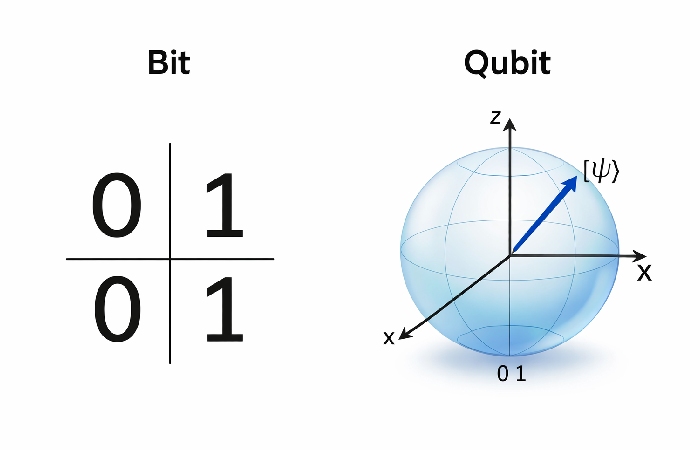
In contrast, to the classic computer which stores information in a single bit (0 or 1), a quantum computer stores information in qubits. Qubits have the power to hold a mixture of 0s and 1s at the same time! Through the use of multiple qubits, a quantum computer has the potential to examine a large number of potential answers simultaneously.
What is a quantum computer anyway, and how is it different from my old regular computer?
A regular computer uses binary and does a computation at a time – even if it does a billion in one second. A quantum computer harnesses phenomena such as superposition and entanglement to work with probability distributions over multiple states simultaneously, as described in IBM’s overview of what quantum computing is.
-
They shine not at everyday tasks like browsing or word processing, but at specialised problems where exploring vast search spaces matters.
An excellent analogy is this: while a classical computer would be like trying each key in a lock individually, a quantum computer would be able to test a large number of “keys” in an ordered way at the same time, and would then use interference to raise the probability of finding the “right” answer.
So why is everybody discussing quantum computers?
Interest increased because:
- Groups of researchers managed to perform narrow calculations exhibiting “quantum supremacy” or “quantum advantage”.
- The biggest technology companies as well as governments started issuing plans and investing large funds into quantum programs.
- United Nations declared 2025 as “International year of quantum science and technology”.
What are the mechanisms of operation of quantum computers?
Quantum computers use quantum states that are much more complex than on/off switches. Qubits can be in a superposition and multiple qubits can be entangled so that their states are correlated in ways that ordinary classical bits are not.
Rather than having switches that only have on/off settings like our current systems, quantum computers utilize a number of vastly different, highly complex quantum states. Qubits, or quantum bits, are in superposition states, and multiple qubits are entangled to have dependent states on each other in a manner not found in current classical bits.
What is a qubit, and what do we use it for?
Qubit – The quantum equivalent to a bit. This can exist as 0 (up to 100% certainty), 1 (up to 100% certainty), or a superposition of 0 and 1 (at some level of probability).
Superposition state – This is analogous to a coin spinning on its edge. So long as it is not observed, it will exist as “both heads and tails at once” until measured.
Entanglement: The phenomenon occurring when two or more qubits are close together in such a way that any measurement made on one immediately influences what we would expect of the other(s), regardless of how far apart they are.
Interference: quantum states may confirm or negates each other, enabling algorithms to reinforce unlikely paths to the solution while eliminating other paths.
Physicists and engineers build qubits out of many possible physical systems, such as superconducting circuits, trapped ions or neutral atoms. These systems come with their own tradeoffs when it comes to stability and scalability.
What does a quantum computer look like in real life?
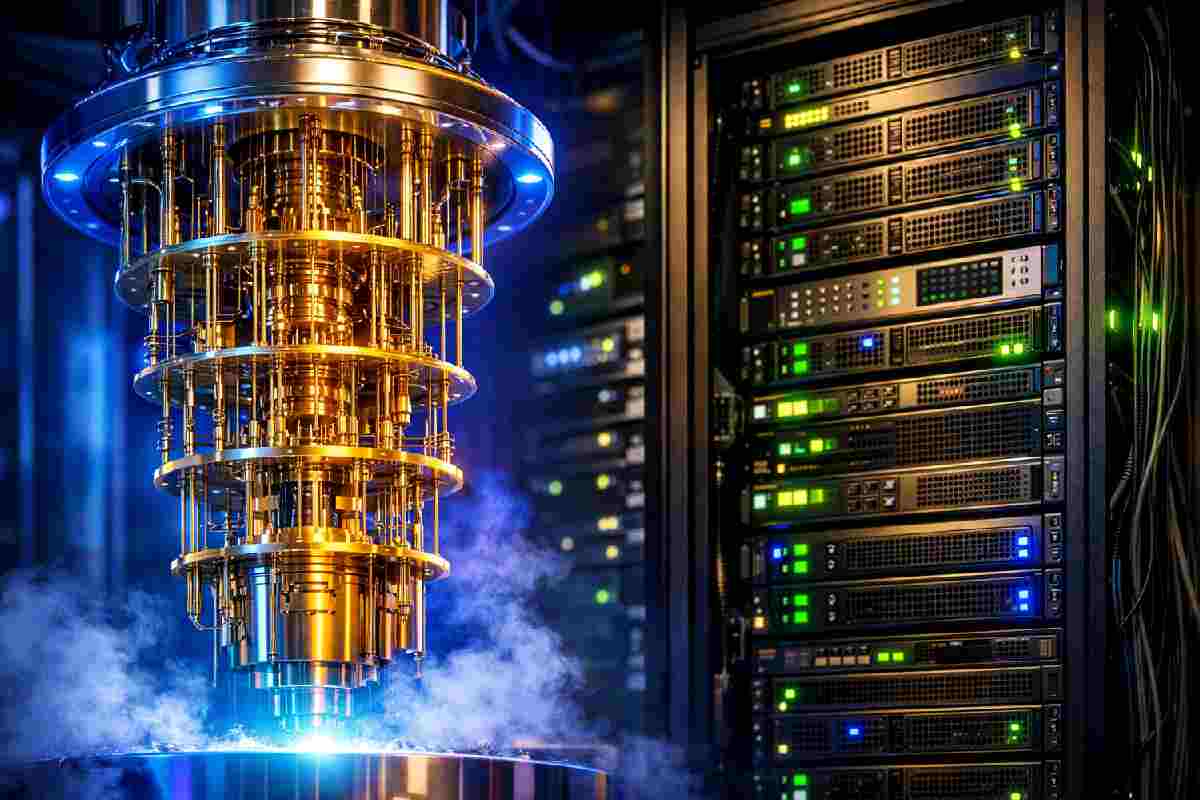
Most real machines look more like scientific experiments than sleek black boxes:
-
Large cryogenic refrigerators (cryostats) cool hardware close to absolute zero to keep qubits stable.
-
Racks of control electronics send microwave or laser pulses to manipulate qubits.
-
Shielding and vibration control are needed, because temperature, electromagnetic noise and mechanical disturbances can easily destroy fragile quantum states.
These practical issues—known collectively as noise and decoherence—are why current devices are small and error‑prone.
Classical vs quantum computers: can they really replace each other?
Quantum computers are not general replacements for classical machines. They are specialised accelerators that will likely work alongside classical systems for the foreseeable future.
Key differences between classical and quantum computers
| Aspect | Classical computer | Quantum computer |
|---|---|---|
| Basic unit | Bit (0 or 1) | Qubit (0, 1, or combinations via superposition)ionq+1 |
| Information space | Grows linearly with bits | Grows exponentially with qubits for certain tasksionq+2 |
| Strength | General‑purpose, everyday computing | Specialised complex problems (simulation, optimisation, factoring)ionq+2 |
| Maturity | Mass‑market, reliable | Experimental, noisy, limited scaleionq+1 |
| Best use | Apps, browsing, office work | Chemistry, materials, cryptography, optimisation researchionq+2 |
Will quantum computers replace normal computers?
Evidence so far suggests:
-
Classical and quantum systems will form hybrid stacks, where classical machines orchestrate workflows and quantum processors tackle specific sub‑problems.
-
Everyday devices like phones and laptops will remain classical, while quantum computers live in data centres or labs as remote services.
So quantum computers extend computing rather than replacing everything that exists today.
What can quantum computers do – and not do – today?
The current era is often called NISQ (Noisy Intermediate‑Scale Quantum). Devices have tens to hundreds of imperfect physical qubits, and error correction is limited.
Are quantum computers useful for anything right now?
Today’s devices are mainly used for:
-
Research into quantum algorithms and error‑correction schemes.
-
Early experiments on chemistry, optimisation and machine learning problems to see where quantum offers advantages.
-
Benchmarking and “quantum utility” demonstrations, where machines complete certain tasks more efficiently than classical alternatives under specific conditions.
These are important steps, but they are far from universal, everyday applications.
Realistic quantum computing use cases
Experts often highlight the following application areas as promising over the long term:
-
Healthcare and drug discovery
-
Simulating molecules and reactions more accurately could speed up drug design and improve understanding of complex diseases.
-
-
Materials and batteries
-
Designing new catalysts for cleaner industrial processes and new materials for batteries, solar cells or electronics.
-
-
Finance and risk analysis
-
Portfolio optimisation, option pricing and risk modelling may benefit from quantum optimisation and sampling techniques.
-
-
Logistics and supply chain
-
Route planning, scheduling and resource allocation problems can be mapped to quantum‑inspired or quantum optimisation algorithms.
-
-
Cybersecurity and cryptography
-
Developing quantum‑safe algorithms and protocols, and in some cases using quantum effects themselves for secure key distribution.
-
These use cases are at different levels of maturity; some are still mainly theoretical while others are being tested on real hardware and simulators.
Quantum computers and security: will they break Bitcoin and encryption?

One of the loudest worries is that a large‑scale quantum computer could crack widely used cryptographic systems, including those that secure cryptocurrencies and the web.
Concerns over Bitcoin and quantum computers:
Current security is based on public-key cryptography:
- Most current public-key schemes rely on computationally difficult problems for classical computers (e.g. Factoring very large numbers, discrete logarithms).
- However some quantum algorithms theoretically tackle these computationally difficult problems very effectively, leaving classical algorithms vulnerable if stable, large scale quantum computers can be built.
- In the case of Bitcoin (and other systems), attackers with sufficiently powerful quantum computers might be able to forge signatures, or transfer bitcoins from someone else.
Can quantum computers really break Bitcoin?
Today’s machines cannot break mainstream cryptography or Bitcoin:
-
They have far too few reliable qubits and high error rates, falling well short of estimates needed for large attacks.
-
Any realistic attack would require fault‑tolerant machines with potentially millions of effective logical qubits, which remain a long‑term goal.
However, security communities treat this as a serious future risk because cryptographic systems often need to remain secure for many years.
What is post‑quantum or quantum‑safe cryptography?
To prepare, researchers and standards bodies are developing and selecting post‑quantum algorithms designed to resist both classical and quantum attacks. These schemes are being evaluated for use in:
-
Internet protocols and browsers.
-
Enterprise and government systems.
-
Potential updates to blockchain and cryptocurrency infrastructures.
For readers, the practical takeaway is that the industry is already working on defences; the shift is more a long‑term migration project than an overnight collapse.
Quantum computers and AI: is ChatGPT a quantum computer?
A common misconception is that systems like ChatGPT must be “quantum” because they seem so powerful or mysterious.
How does ChatGPT work today?
Large language models like ChatGPT run on:
-
Classical computing hardware, mainly GPUs or specialised accelerators, in large data centres.
-
Deep learning algorithms that learn patterns from vast text datasets using matrix operations and optimisation methods.
There is no quantum hardware involved in the inference or training of mainstream models today.
How could quantum computing help AI in the future?
Researchers are exploring Quantum Machine Learning (QML) to see whether:
-
Quantum algorithms can speed up parts of training or inference for certain tasks.
-
Quantum sampling might help explore complex model landscapes or probabilities more efficiently.
At the same time, AI already helps people write, debug and optimise quantum code and experiments, creating a two‑way relationship rather than one replacing the other.
Are quantum computers real now, or still just hype?
Real quantum computers exist today, but they are mostly prototypes and specialised platforms rather than consumer products.
Major providers such as IBM now operate cloud‑accessible quantum systems, described in their IBM Quantum program pages, which showcase devices with over a hundred qubits.
Do real quantum computers exist today?
Yes, several organisations provide access to quantum processors:
-
Machines with tens to low hundreds of qubits are available via cloud platforms.
-
Users can run small circuits, experiment with algorithms and benchmark performance.
However, these systems are limited in size and coherence and are mainly used by researchers, specialists and early adopters.
Why 2025 is called the “Year of Quantum”
The United Nations proclaimed 2025 the International Year of Quantum Science and Technology, as described in its resolution on the International Year of Quantum Science and Technology, highlighting:
-
One century of quantum theory and its impact on modern technology.
-
The role of quantum science in future computing, communication, sensing and security.
-
Global efforts to expand education, outreach and collaboration in the field.
This doesn’t mean quantum computers become fully mature by 2025; it signals global focus rather than a specific technical deadline.
Hype vs reality: what to expect in the next 5–10 years
Realistic expectations include:
-
Gradual improvements in qubit counts, error rates and reliable execution of larger circuits.
-
More demonstrations where quantum devices offer practical advantages on specific industrial problems.
-
Careful integration of quantum coprocessors into cloud and high‑performance computing stacks.
Most people will experience quantum computing indirectly through improved services, security protocols or scientific advances rather than owning a quantum device themselves.
Current trends in quantum computing (2026)
Quantum computing is steadily shifting from purely academic work toward practical, real‑world use through hybrid classical–quantum workflows. In these setups, classical computers handle most tasks while quantum processors tackle narrow, complex sub‑problems such as optimisation or simulation.
Across industries, pilots and research projects focus on cryptography and quantum‑safe security, drug discovery and molecular simulation, and optimisation challenges in logistics, finance and supply chains. Similar approaches support faster analysis of complex systems that are hard to brute‑force with classical methods alone.
National strategies increasingly treat quantum as critical technology infrastructure, backing it with workforce programmes, long‑term funding and coordinated research hubs. At the same time, software stacks and tools, including Python‑based SDKs and platforms like Qiskit, continue to evolve to make experimentation more accessible for developers and researchers.
Hardware remains in the Noisy Intermediate‑Scale Quantum phase, with devices typically offering tens to a few hundred fragile qubits. Many analysts expect genuinely fault‑tolerant, broadly useful machines to emerge over the next decade, alongside continued work on benchmarking frameworks and standards to compare performance and guide industrial adoption.
Quantum computing around the world: who is leading?
Quantum computing has become a strategic area for many countries and regions.
Which countries are investing most in quantum computing?
Broadly, the landscape looks like this:
-
United States: Strong private‑sector leadership with major tech companies and universities pushing hardware, software and applications.
-
China: Large government investment, especially in quantum communication and satellite‑based experiments.
-
European Union, UK, Canada and others: Coordinated programmes focusing on research, ecosystem building and industrial partnerships.
Many other countries are launching national initiatives to avoid being left behind in quantum technologies.
What is India’s National Quantum Mission?
India’s National Quantum Mission (NQM) aims to build a strong domestic ecosystem in quantum computing, communication, sensing and materials. The mission includes four thematic hubs hosted by leading institutions:
-
IISc Bengaluru: Quantum computing platforms.
-
IIT Madras (with C‑DOT): Quantum communication technologies.
-
IIT Bombay: Quantum sensing and metrology.
-
IIT Delhi: Quantum materials and devices.
The mission targets multi‑hundred‑qubit machines, secure quantum communication networks and indigenous hardware development over the coming years. Indian organisations are also exploring quantum key distribution and related experiments in communication and space contexts.
Common myths and misconceptions about quantum computers
Because the topic is abstract and media coverage is dramatic, myths spread quickly.
“Quantum computers will replace all classical computers soon”
Classical processors are extremely efficient at general‑purpose tasks and will remain the backbone of everyday computing. Quantum devices are specialised tools for particular classes of problems and will likely stay in that niche. You should expect collaboration, not wholesale replacement.
“Quantum will instantly destroy all current encryption”
While quantum threatens some widely used schemes in theory, building a large‑scale, fault‑tolerant machine capable of breaking modern keys is a long‑term challenge. Quantum‑safe cryptography and migration planning are already underway, reducing the risk of a sudden collapse. The risk is serious but manageable with planning and gradual upgrades.
“Quantum computers are just faster supercomputers”
Quantum advantage is not just about speed. Some problems map naturally to quantum operations, allowing qualitatively different solution strategies. For many tasks, classical supercomputers will remain more practical even if a quantum method exists in theory, so quantum is a different paradigm, not a simple upgrade.
“Our brains are quantum computers”
Some theories speculate about quantum effects in the brain, but there is no accepted evidence that brains function as practical quantum computers for cognition. Mainstream neuroscience models brain function using classical processes at higher levels. This area remains speculative and should not be confused with engineered quantum devices.
How can you learn about and experiment with quantum computing?
If you’re curious, you do not need access to physical hardware to get started.
What skills do you need for quantum computing?
Common skill sets include:
-
Mathematics: linear algebra, complex numbers and probability.
-
Physics: basic quantum mechanics concepts.
-
Programming: usually Python, plus familiarity with quantum SDKs.
-
Domain knowledge: chemistry, optimisation, finance or security, depending on the application.
Many people come from either physics or computer science and then gain the missing side over time.
How can beginners try quantum computing today?
Practical entry routes include:
-
Using cloud‑based quantum learning platforms that provide simulators and limited access to real devices.
-
Working through tutorials and notebooks that teach how to build and run simple circuits in languages such as Qiskit, Cirq or similar frameworks.
-
Joining online courses or communities focused on “Quantum Computing 101” level content.
You can run experiments on your laptop via simulators long before touching real hardware.
What kinds of careers exist in quantum computing?
Roles span several areas:
-
Researcher: develops new algorithms, error‑correction techniques or hardware designs.
-
Software / algorithms engineer: builds tools, compilers and applications on top of quantum platforms.
-
Hardware engineer: works on qubit devices, control systems and cryogenic hardware.
-
Domain specialist: translates industry problems in areas like finance, logistics or pharma into quantum‑amenable formulations.
Demand is still specialised but growing as more organisations explore pilot projects.
Quick FAQs on quantum computers
Do quantum computers exist now?
Yes. Several organisations operate quantum processors with tens to low hundreds of qubits and offer access through cloud platforms, mainly for research, education and early business experiments.
How many quantum computers are there?
There is no single public count, but multiple companies, labs and national programmes run their own devices, many of which are accessed remotely via the cloud rather than as standalone products.
When will quantum computers be available to everyone?
Quantum computers are already “available” as cloud services, but fully error‑corrected, large‑scale machines for broad commercial use are expected to take many years and will likely remain data‑centre technologies rather than home devices.
Which companies are building quantum computers?
Global efforts include large technology companies, specialised startups and research consortia developing hardware, software and services around different qubit technologies and application areas.
What language is used to program quantum computers?
Developers typically use Python‑based frameworks provided by various platforms, along with domain‑specific languages or libraries that describe quantum circuits, gates and algorithms at a higher level.
Is it worth learning quantum computing today?
If you are interested in research, advanced computing or emerging tech, learning the basics can be valuable, especially when combined with a strong foundation in maths, physics or a relevant application domain.
Will quantum computers replace AI or work alongside it?
Quantum computers are expected to complement AI by potentially speeding up certain optimisation or sampling tasks, while AI continues to run primarily on classical hardware and also helps design and control quantum experiments.
Will quantum computers break Bitcoin?
Current quantum machines cannot break Bitcoin, but future large‑scale, fault‑tolerant devices could threaten some underlying cryptography, which is why researchers are working on quantum‑safe schemes and migration strategies today.
Key Takeaways
- Quantum computing is transitioning from lab research to early real-world application pilots (e.g., finance, optimization, security) as of 2026.
- Industry and national strategies now treat it as strategic infrastructure.
- Practical deployments are occurring, such as India’s first commercial 8-qubit system in a campus environment.
- Hybrid computing workflows and quantum software development are practical near-term aims.
- Challenges — hardware scale, error correction, security implications — remain and are the subject of ongoing research.
Final Conclusion
Quantum computers are powerful but specialised tools that extend, rather than replace, classical computing, and most of their impact will come through targeted applications in science, security and industry over the next decade. By focusing on facts instead of hype, you can track quantum computers with a clear head and prepare for the real changes they will bring.
Author Bio
Technologyford content is written to be practical and easy to understand across topics like health, technology, business, marketing, and lifestyle. Articles are based mainly on reputable, publicly available information, with AI tools used only to help research, organise, and explain topics more clearly so the focus stays on real‑world usefulness rather than jargon or unnecessary complexity.
Disclaimer: This article is for general educational purposes only and does not provide financial, investment, cybersecurity or legal advice. Always consult qualified professionals before making decisions related to quantum technologies.