
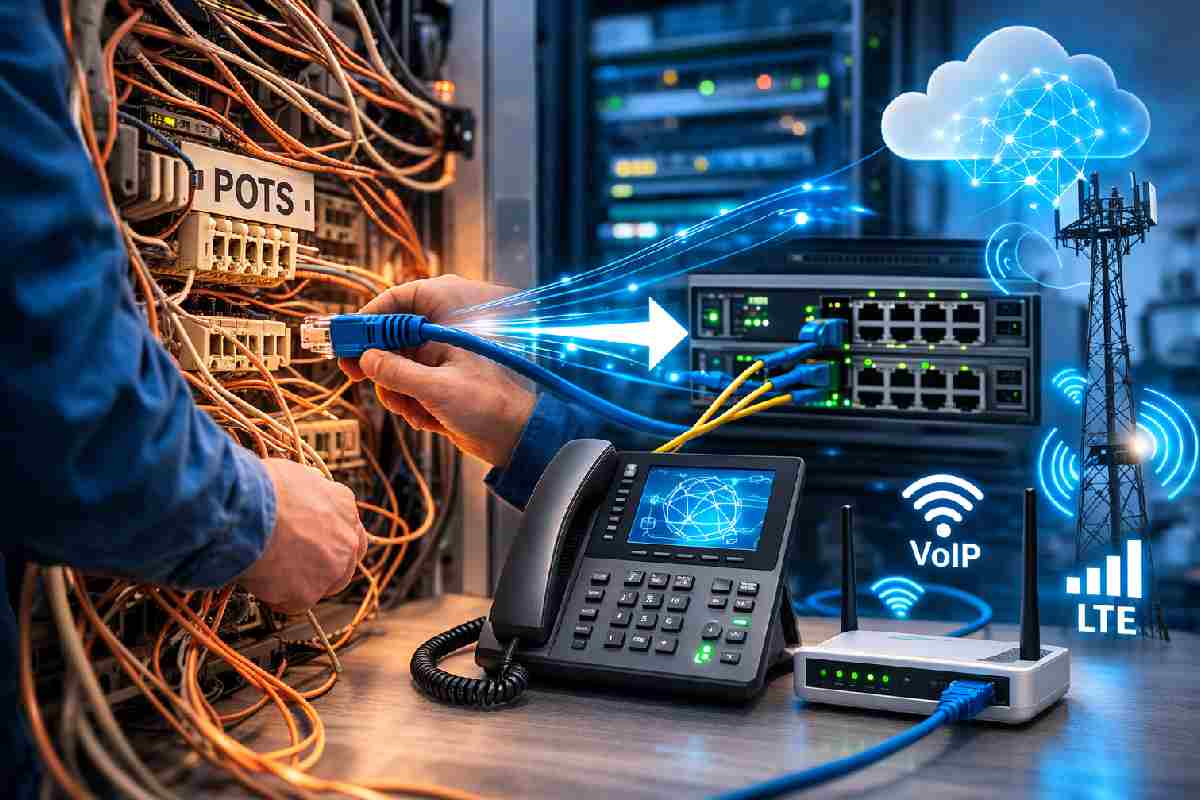
Your POTS lines are going away. The only question is whether *you* control the transition — or your carrier does.
The FCC’s deregulation of legacy copper networks has given telecom providers much more flexibility to retire Plain Old Telephone Service (POTS) lines on their own schedules. Costs are surging — in many markets, businesses now pay well over $100 per line per month, and some report hundreds of dollars per line for basic analog service on aging copper. And after AT&T’s October 2025 changes, you can no longer move, add, or modify existing POTS lines with many providers.
This guide breaks down every POTS line replacement option, which systems each one works for, what compliance rules apply, and how to migrate without disrupting your operations.
Table of Contents
Quick Summary
- POTS line replacement** = moving from analog copper phone lines to VoIP, LTE cellular, SIP trunking, or cloud-based phone systems
-
Why now? FCC deregulation lets carriers retire copper with limited notice — and costs are rising 100–300% or more in many markets
- Life-safety systems** (fire alarms, elevator phones) need NFPA 72-compliant replacements — not just any VoIP
- Best option for voice/fax:** VoIP or SIP trunking
- Best option for alarms/elevators:** Cellular LTE (POTS in a Box)
- Cost savings:** Up to 80% per line vs. staying on POTS
What Is POTS Line Replacement?
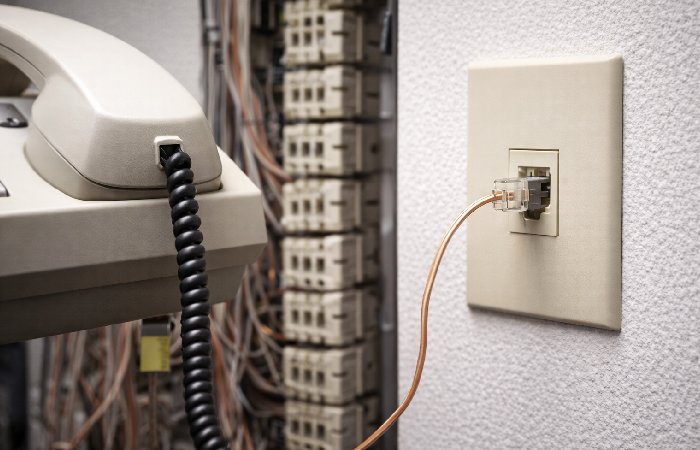
POTS line replacement is the process of migrating analog telephone connections — which transmit voice signals over copper wires — to modern digital or wireless communications infrastructure. It involves identifying every system that uses a POTS line, choosing the right alternative technology, and completing a managed transition without disrupting critical operations.
POTS (Plain Old Telephone Service) lines have powered business communications for over a century. They use copper wire to carry analog voice signals — simple, reliable, and power-independent. But that era is ending.
How POTS Lines Work (and Why They’re Being Retired)
A POTS line transmits voice as an analog electrical signal over a copper pair. The network itself supplies power to the line — which is why a traditional landline still works during a power outage. That power independence made POTS the gold standard for fire alarms, elevator phones, and emergency systems.
But copper infrastructure is aging. Technicians who know how to maintain it are retiring. Replacement parts are increasingly hard to source. Carriers like AT&T and Verizon are actively decommissioning copper networks because maintaining them costs far more than deploying fiber or wireless.
The result: POTS lines are becoming unreliable, expensive, and soon — unavailable.
What Systems Depend on POTS Lines?
Many businesses don’t realize how many systems still rely on POTS. A typical audit reveals:
- Voice phone lines (main business numbers, analog desk phones)
- Fax machines**
- Fire alarm panels (transmit signals to central monitoring)
- Elevator emergency phones (required by safety code)
- Security and burglar alarms
- Point-of-sale (POS) terminals (older credit card readers)
- Gate and intercom systems
- Remote monitoring devices (HVAC, utilities, medical equipment)
Each system type has different compliance requirements — and a different ideal replacement solution.
Why POTS Lines Are Being Discontinued
FCC Deregulation and the Copper Sunset
Two FCC orders drive the current urgency:
- FCC Order 19-72 (2019): Removed the obligation for incumbent carriers to maintain discounted legacy copper services. This triggered massive price hikes across the industry.
- FCC Order reducing notice periods (2025): Carriers now have more flexibility to retire copper under recent FCC rule changes and waivers, and in practice many businesses get about 90 days’ effective notice once a retirement is announced in their area, instead of the longer lead times that were common in the past.
There is no single national POTS shutdown date. Each carrier sets its own retirement schedule. According to the FCC’s guidelines on copper network retirement, carriers must notify customers, but they are no longer obligated to maintain POTS availability indefinitely.
AT&T announced that after October 15, 2025, customers cannot move, add, or change existing POTS lines. Verizon and other regional carriers are following similar timelines.
Beyond regulatory changes, carriers are under increasing financial pressure to maintain aging copper infrastructure while revenue from traditional landlines keeps shrinking. As one industry analysis notes, an assortment of infrastructure costs is being carried by phone companies that are no longer seeing the returns they want from legacy POTS service, which is intensifying the pressure for carriers to accelerate the retirement of copper networks.
At the same time, cellular services, VoIP, and modern IP networks have become reliable and cost-effective enough that there is little justification for keeping analog lines for most business use cases. Forward-looking organizations are already redesigning their workplaces to take advantage of digital communications and cloud-based systems, because modern office and network structures can significantly minimize operating costs compared with legacy landline setups. Holding onto remaining POTS lines has become a short-term tactic at best; in many markets, they will be functionally obsolete within a few years, and planning a structured replacement now is far less risky than reacting after a shutdown notice.
Skyrocketing POTS Line Costs (2024–2026)
This is the most immediate pain point for most businesses.
POTS line costs have increased 100–300% or more in many markets since FCC Order 19-72, with some businesses seeing even higher increases. What once cost $20–$40/month now commonly runs $80–$150+ per line per month, and in some cases several hundred dollars per line for basic analog service. Carriers often apply “copper surcharges” and other fees not just to recoup maintenance costs, but to encourage customers to migrate to modern infrastructure.
A business with 10 POTS lines at $200/month each is spending $2,000/month — **$24,000/year** — just to maintain legacy connectivity. The cost of replacing those lines is often recovered within 6–12 months.
The 5 Best POTS Line Replacement Options
Different systems need different solutions. Here’s a complete comparison:
| Solution | Monthly Cost (est.) | Best For | NFPA 72 Compliant? | Power Outage Safe? |
|---|---|---|---|---|
| VoIP | $20–$50/seat | Voice calls, fax, PBX | ⚠️ Some solutions | ❌ Not inherently |
| Cellular / LTE | $25–$60/line | Alarms, elevators, remote sites | ✅ Yes (MFVN-certified) | ✅ With battery backup |
| SIP Trunking | $15–$40/channel | Existing IP-PBX systems | ⚠️ Depends on setup | ❌ Not inherently |
| POTS in a Box | $25–$50/device | Mixed analog devices, critical systems | ✅ Many options | ✅ With backup |
| UCaaS / Cloud | $30–$70/user | Full business communication overhaul | ❌ Rarely | ❌ No |
VoIP (Voice over IP)
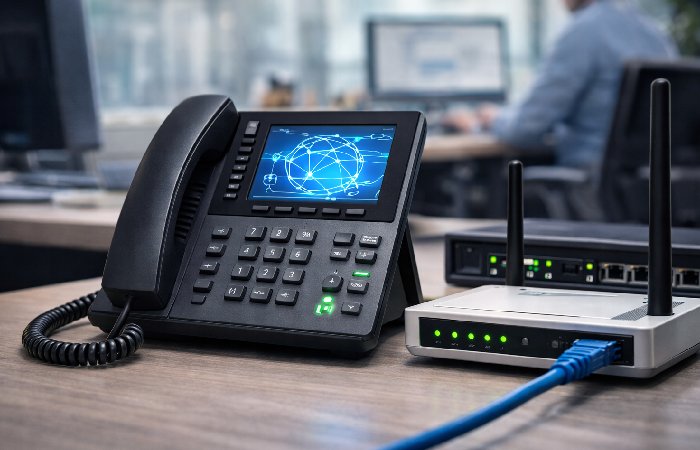
VoIP converts your voice into digital data packets and transmits them over your internet connection. It’s the most common POTS replacement for standard voice communication.
**How it works:** An Analog Telephone Adapter (ATA) — or a native IP phone — connects to your internet router. Calls are routed through your VoIP provider’s servers in the cloud.
Pros:
- Significant cost savings (30–50% vs. POTS)
- Advanced features: voicemail-to-email, call routing, video conferencing, CRM integration
- Easy to scale — add lines without rewiring
Cons:
- Requires reliable, high-speed internet
- Fails during power outages without a UPS (Uninterruptible Power Supply)
- Signal conversion can cause alarm panel incompatibility at central monitoring stations
- Not NFPA 72-compliant for fire alarm signaling without additional certification
Best for: General business voice lines, fax lines, conference rooms, remote workers.
Cellular / LTE POTS Replacement
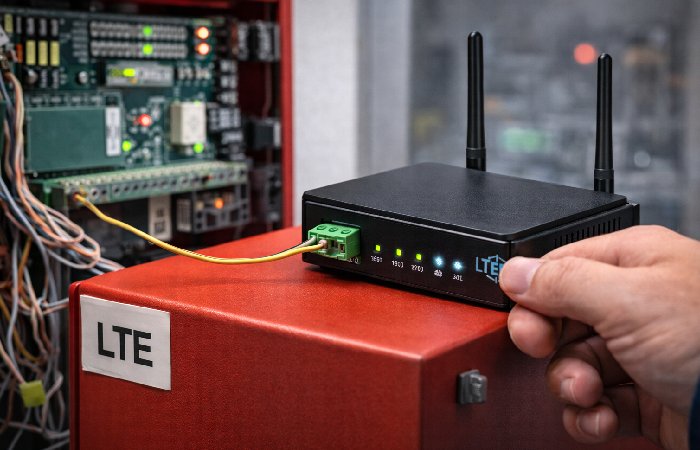
Cellular solutions use 4G LTE or 5G networks — not your internet connection — to carry voice signals. A cellular terminal or adapter connects to existing analog phones or devices and uses the wireless carrier network.
How it works: A device like a cellular terminal plugs into the analog port of your alarm panel, elevator phone, or existing phone. It communicates over LTE — completely independent of your local network or power grid (with battery backup).
Pros:
- Works without internet or local power (with built-in battery)
- NFPA 72-compliant when certified as an MFVN (Managed Facilities Voice Network)
- Ideal for fire alarms, elevator emergency phones, remote equipment
- Dual-carrier SIM options provide failover redundancy
Cons:
- Monthly cellular service fees per line
- Dependent on cellular coverage in the area
- Higher upfront device cost ($100–$300 per unit)
Best for: Fire alarm panels, elevator emergency phones, security systems, remote locations.
SIP Trunking
SIP (Session Initiation Protocol) trunking delivers voice services over your existing internet connection to an IP-PBX phone system. It replaces traditional PRI or analog lines at the business’s central phone system level.
How it works: Your IP-PBX connects to a SIP trunk provider via your internet connection. Calls are routed digitally — no physical copper needed.
Pros:
- Cost-effective for businesses with existing IP-PBX infrastructure
- Scalable — add channels without new hardware
- Preserves existing internal extension structure
Cons:
- Requires IP-PBX — not for simple analog systems
- Internet-dependent; fails without power/connectivity
Best for: Mid-to-large businesses with existing IP-PBX systems.
POTS in a Box (Analog Gateway Devices)
“POTS in a Box” devices are analog-to-digital gateways. They plug into existing analog ports on alarm panels, elevator phones, fax machines, or PBX systems — and translate signals to digital or cellular.
How it works: Connect the device between your analog equipment and the outside world. The gateway handles the signal conversion and connects via VoIP, LTE, or a combination of both. Many include battery backup.
Pros:
- No need to replace existing analog equipment
- Flexibility: LTE, VoIP, or hybrid connectivity
- NFPA 72-compliant versions available
- Rapid deployment — plug-and-play for most systems
Cons:
- Still requires ongoing service from a provider
- Must verify compliance certification for life-safety use
Best for: Businesses that need a bridge solution while planning longer-term migration; multi-use facilities with mixed analog systems.
UCaaS / Cloud Phone Systems
Unified Communications as a Service (UCaaS) platforms (e.g., Microsoft Teams Phone, RingCentral, Zoom Phone) replace your entire phone system in the cloud.
Pros:
- Comprehensive: voice, video, messaging, collaboration in one platform
- Ideal for multi-location, remote-first businesses
- No on-premises hardware to maintain
Cons:
- Not suitable for life-safety systems
- Requires strong, reliable internet across all locations
- Highest complexity to deploy
Best for: Modern businesses doing a full communications overhaul; not for standalone alarm or elevator line replacement.
Critical Systems Compliance: Fire Alarms, Elevators & More
This is where most businesses make costly mistakes. Not every POTS replacement works for life-safety systems.
NFPA 72 and Fire Alarm Panels
NFPA 72 the National Fire Alarm and Signaling Code, governs how fire alarm signals are communicated to monitoring stations. Fire alarm panels traditionally transmit over POTS because the lines are always powered — even when building power fails.
The problem with VoIP for fire alarms:
- Standard VoIP converts analog signals to packets — alarm panels send data tones that can become garbled in this conversion
- Most VoIP systems lack battery backup, meaning no signaling during a power outage
- Standard VoIP is not NFPA 72 compliant unless specifically certified as an MFVN
The compliant solution: Cellular LTE-based POTS replacement devices certified as MFVN (Managed Facilities Voice Network) systems under NFPA 72. These provide 24–48 hours of battery backup, dual-carrier redundancy, and proper signal integrity.
ASME A17.1 and Elevator Emergency Phones
The ASME A17.1 Safety Code for Elevators and Escalators sets performance requirements for elevator cab emergency phones, including rapid connection to a live operator and operation during power outages as enforced by the local authority having jurisdiction.
- Standard VoIP cannot guarantee this without backup power and proper failover
- Cellular LTE solutions with battery backup meet this requirement
- Building owners who don’t replace POTS correctly risk liability and code violations during inspections
Which Replacement Options Are Compliant?
| System | VoIP | Cellular LTE | POTS in a Box (LTE) | SIP Trunk |
|---|---|---|---|---|
| Fire alarm panel | ❌ | ✅ (MFVN) | ✅ (if MFVN certified) | ❌ |
| Elevator emergency phone | ❌ | ✅ | ✅ | ❌ |
| Security alarm | ⚠️ Some | ✅ | ✅ | ❌ |
| Fax machine | ✅ (T.38) | ✅ | ✅ | ✅ |
| Business voice lines | ✅ | ✅ | ✅ | ✅ |
How to Replace POTS Lines: Step-by-Step Migration Guide
Step 1 – Audit All POTS-Dependent Systems
Start by creating a complete inventory. List every POTS line you have, what it connects to, where it’s located, and what compliance rules apply.
Document:
- Line number and account details
- Connected device or system (alarm panel, elevator phone, fax, voice line)
- Compliance requirement applicable (NFPA 72, ASME A17.1, local codes)
- Priority level (critical life-safety vs. non-critical)
Step 2 – Match Each System to the Right Solution
Don’t apply a one-size-fits-all approach:
- Fire alarms and elevator phones → Cellular LTE (MFVN-certified)
- Business voice lines and conference rooms → VoIP or UCaaS
- Fax machines → VoIP with T.38 fax support or Internet fax
- Existing IP-PBX systems → SIP Trunking
- Mixed analog environments (interim)→ POTS in a Box
Step 3 – Plan Number Porting and Vendor Transition
Work with your chosen provider to port existing phone numbers. Most business phone numbers can transfer to VoIP or SIP trunks.
- Confirm porting timelines with your new provider (typically 2–4 weeks)
- Maintain existing POTS lines until new systems are fully tested
- Notify stakeholders, including alarm monitoring companies, of the line change
Step 4 – Test Before Going Live
For life-safety systems, testing is non-negotiable:
- Coordinate with your alarm monitoring company to test signal transmission on the new line
- Conduct an elevator emergency phone call test with your AHJ (Authority Having Jurisdiction)
- Test power-outage scenarios — simulate a building power failure and verify continued operation
Step 5 – Monitor and Optimize
After migration:
- Monitor call quality and system uptime for 30–60 days
- Review billing to confirm POTS line cancellations processed correctly
- Document the new system in your facilities/IT inventory for future audits
POTS vs. Modern Alternatives: Total Cost Comparison
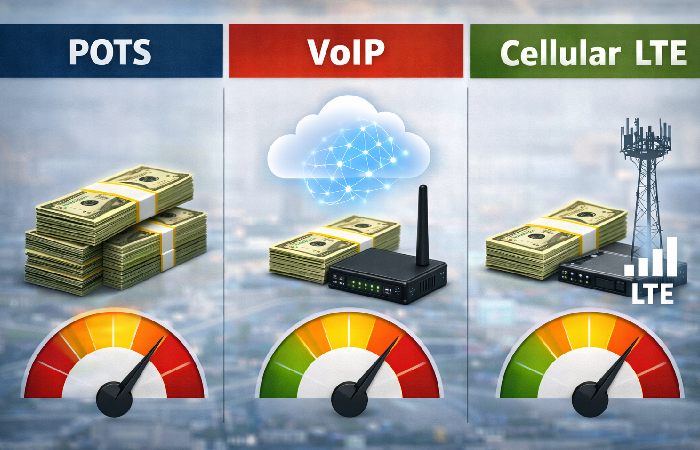
Here’s a 3-year TCO comparison for a business with 10 lines:
| Item | POTS (Staying) | VoIP | Cellular LTE |
|---|---|---|---|
| Monthly cost per line | $150–$300 | $25–$50 | $30–$60 |
| 10-line monthly total | $1,500–$3,000 | $250–$500 | $300–$600 |
| Setup/equipment (one-time) | $0 | $500–$2,000 | $1,000–$3,000 |
| 3-Year Total | $54,000–$108,000 | $9,500–$20,000 | $11,800–$24,600 |
| Savings vs. POTS | — | Up to 82% | Up to 78% |
The math is clear. Staying on POTS is the most expensive option — by far.
Common Mistakes to Avoid During POTS Replacement
- Using standard VoIP for fire alarms. Signal conversion fails alarm panels. Always use NFPA 72-certified cellular for life-safety systems.
- Not testing before canceling POTS lines. Canceling before testing leaves critical systems unmonitored during gaps.
- Ignoring power redundancy. VoIP requires internet and electricity. A power outage that takes down your internet also silences your VoIP — including alarms.
- Not porting numbers before canceling. Disconnect POTS before porting completes and you lose the number.
- Forgetting remote or secondary sites. Branch offices, parking garages, and storage facilities often have hidden POTS lines that get missed in audits.
- Assuming one vendor handles everything. Voice, alarms, and elevators may require different vendors. Clarify scope before committing.
Who This Is For / Who Should Avoid Certain Options
Best for:
- VoIP: Businesses replacing standard voice lines, looking to cut costs and add features
- Cellular LTE / POTS in a Box: Facilities managers responsible for fire alarms, elevators, or security systems
- SIP Trunking: Mid-to-large businesses with existing IP-PBX infrastructure
- UCaaS: Organizations doing a full digital communications transformation
Proceed with caution:
- VoIP-only solutions for life-safety systems — verify NFPA 72 compliance before deploying
- Any cellular solution in areas with poor carrier coverage — run coverage tests first
- Budget-first decisions that skip compliance verification — code violations cost far more than the “savings”
Not for:
- Generic residential VoIP for commercial fire alarm panels — not code-compliant
- Single-carrier cellular solutions for critical systems — dual-carrier failover is essential
Final Verdict
POTS line replacement is no longer optional. With FCC deregulation accelerating copper network retirements and costs spiraling, the only question is which solution fits your needs.
For most businesses, **the ideal approach combines VoIP for voice/fax lines and cellular LTE for life-safety systems**. This keeps costs low, maintains compliance, and eliminates the reliability risks of aging copper.
Start with a full audit of your POTS-dependent systems. Match each system to the right solution. Test before you cancel. And prioritize compliance for life-safety systems — the cost of a violation or outage far exceeds the cost of doing it right.
The window for a controlled, low-risk migration is narrowing. Act before your carrier acts for you.
Frequently Asked Questions
Q1: What is replacing POTS lines?
A: POTS lines are being replaced by VoIP (Voice over IP), cellular LTE solutions, SIP trunking, and cloud-based phone systems. The right replacement depends on what the POTS line was used for — voice calls, fax, alarms, or elevators each have different optimal solutions.
Q2: Are POTS lines really being discontinued?
A: Yes. The FCC’s deregulation (Order 19-72) removed the requirement for carriers to maintain POTS service indefinitely. Carriers can now retire copper lines with just 90 days’ notice. AT&T, Verizon, and other major carriers are actively decommissioning copper networks.
Q3: What is a POTS line replacement for a fire alarm?
A: Fire alarm panels require NFPA 72-compliant replacements — typically cellular LTE-based solutions certified as an MFVN (Managed Facilities Voice Network). Standard VoIP is generally not compliant for fire alarm signaling because it can distort alarm tones and lacks built-in battery backup.
Q4: How much does POTS line replacement cost?
A: POTS replacement typically costs $25–$60/month per line for cellular or VoIP service, plus $100–$300 in one-time device costs for cellular adapters. Over 3 years, businesses save 75–82% compared to staying on aging POTS at current tariff rates.
Q5: Can VoIP replace all POTS lines?
A: VoIP can replace most standard voice and fax POTS lines cost-effectively, but it is not suitable for fire alarms or elevator emergency phones without specific NFPA 72 certification. For life-safety systems, cellular LTE is the preferred compliant alternative.
Q6: How long does POTS line migration take?
A: A basic migration (voice lines only) typically takes 2–6 weeks, including audit, vendor selection, number porting, and testing. A complex migration involving fire alarms, elevators, and multi-site infrastructure can take 2–4 months. Planning early avoids rushed, non-compliant transitions.