
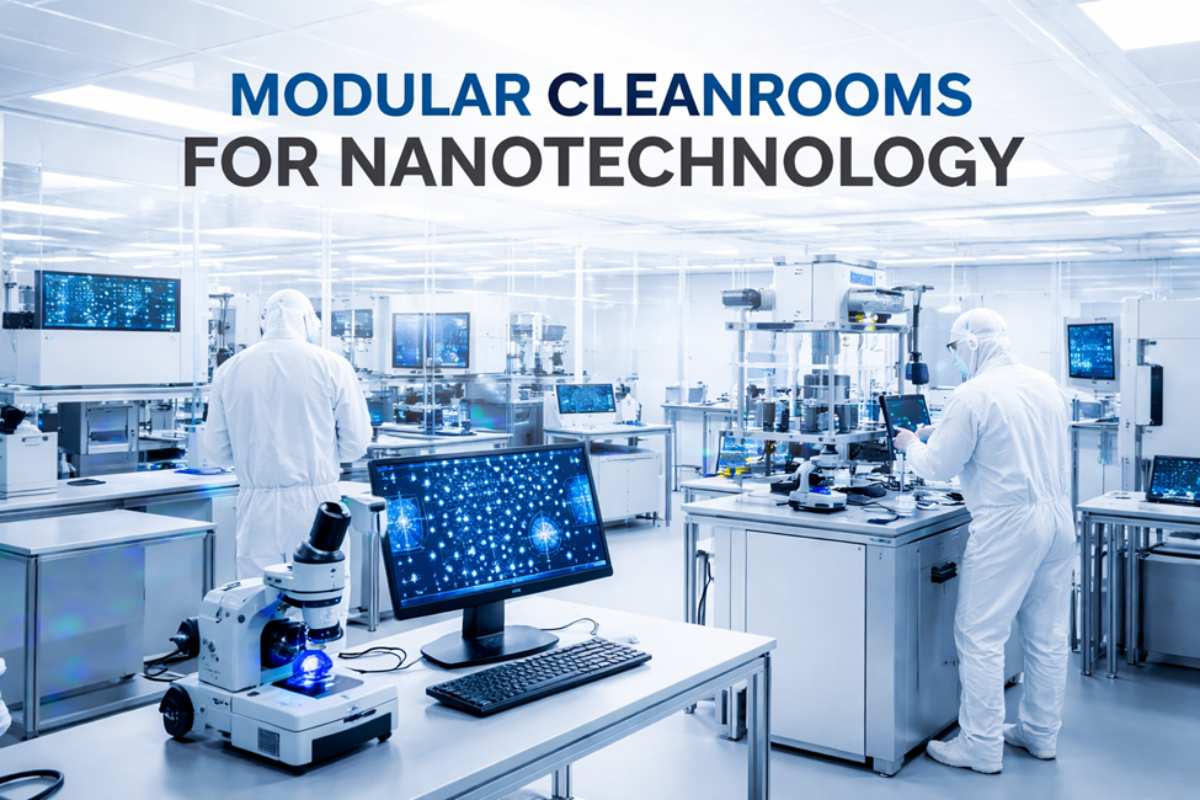
In nanotechnology, the tiniest of particles can lead to compromised results. In this industry, and others like nanoelectronics, and advanced material processing, maintaining a highly controlled environment is a requirement, and not an option.
For industries such as these, modular cleanrooms provide the exact type of environment required. This type of environment will offer the flexibility, precision, and reliability required to enable nanotechnology research and manufacturing. You can learn more about nanotechnology here: https://www.britannica.com/.
In this article, we will look, in some detail, at why cleanroom control is essential in nanotechnology, why modular cleanrooms support nanotechnology work, and the benefits they offer. Let’s get right into it.
Table of Contents
How Modular Cleanrooms Support Nanotechnology Work
There are a number of ways that modular cleanrooms support nanotechnology work. Let’s look at a few of these.
Precise Environmental Control
Modular cleanrooms are built to adhere to the strict ISO cleanliness classifications required for nanotechnology processes. These include all the ISO classifications expected of conventional cleanrooms such as the ISO Class 1 up to Class 8. To ensure that sub-micron level particles are removed, advanced ULPA or HEPA filtration systems are put in place. These work side-by-side integrated HVAC systems that help maintain the required temperature, pressure, and humidity.
Some applications that require this level of control include:
- Fabrication of nanoelectronic
- Synthesis of nanomaterials
- Thin-film deposition
- Advanced microscopy and testing
- Surface coating and analysis
Design Flexibility for Easy Scalability
In the nanotechnology industry, research directions can evolve really quickly. This change may require new processes, new tools and new workflows. With traditional cleanrooms, accommodating such changes will require extensive, and expensive renovation work. However, with modular nanotechnology cleanrooms, the entire setup can be quickly reconfigured to adapt to the new processes, tools, and workflow. This is done with little downtime and at a fraction of what it would have cost.
When you are running a research lab or a pilot production setup in which requirements can quickly shift or change every now and again, you will find the flexibility offered here to be a life saver.
The Basics of Modular Cleanrooms
Modular cleanrooms operate under the same core principles as their traditional variations. However, they differ in their design and implementation. This is what offers the distinct benefits associated with them.
Some of these include:
- Prefabricated design which aids rapid deployment – The components of modular cleanrooms are manufactured under highly controlled conditions and then delivered to the site where they are assembled. This operational modality reduces construction time while also increasing accuracy of design implementation. This reduced installation time offers critical advantage for projects operating under tight schedules.
- Comprehensive airflow and filtration systems – Because of the high-level of air purity required in these spaces, modular cleanrooms ensure continuous air filtration and circulation by using some of these systems
- Pressure Differentials – This prevents the entry of contaminants into cleaner zones.
- Laminar Airflow System – This system ensures the uniform movement of air in a given direction, preventing particle settling.
These two systems protect the sensitive nanotechnology processes throughout the different cycles.
- Scalability and Zoning – In the design of modular cleanrooms, resources are carefully allocated to where they are most needed. For example, zones with different levels of cleanliness requirements can be created. This ensures that resources are not wasted on areas that do not require very high cleanliness levels. In the same vein, expansion requirements can be integrated into the existing structure with ease, reducing downtime and construction costs.
- Material and personnel control – Interestingly, the biggest source of contamination in a cleanroom environment is humans. To prevent this, strict protocols are put in place for personnel entry. These include:
- Gowning areas
- Air showers
- Specialized garments
- Cleaning and staging of materials before entry
These basic operational modalities are at the chore of the benefits associated with their use.
Benefits of Using Modular Cleanrooms in Nanotechnology Facilities
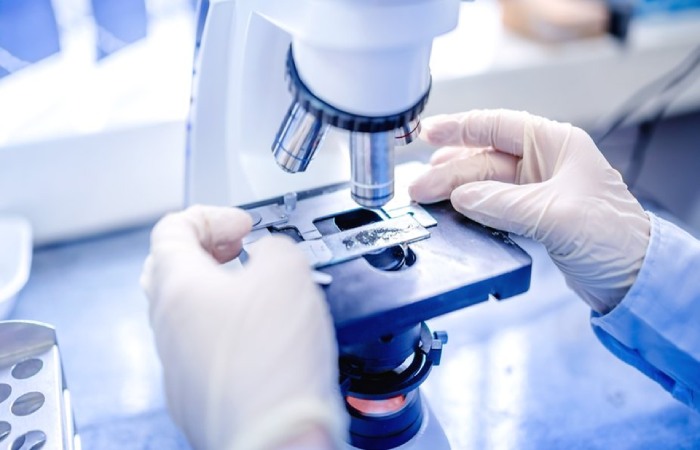
From the previous sections, we can see that there are a number of benefits to making use of modular cleanrooms. Let us look at the more common ones.
Faster Construction and Deployment
Because the components used for building these modular cleanrooms are prefabricated offsite and then assembled onsite, construction time is significantly reduced. This quick deployment time means that nanotechnology teams can get started on their projects much faster than would have been the case with traditional cleanrooms. The implication of this is faster response to regulatory deadlines, market demands and funding cycles.
Reduced Scalability Issues
The needs of a nanotechnology project change through the cycle of the project. From the pilot production stage to the full manufacturing stage, certain changes in demand are sure to occur. With modular cleanrooms, scaling to accommodate these changes is pretty easy. This allows for a smooth transition from one stage to another, reducing lost time and revenue.
Less Operational Disruptions
Modular cleanrooms can be installed in existing structures, especially when the nanotechnology facility operates within an active structure or a shared space. Aside from the ability to install them, the installation can be carried out with little to no disruption to existing operations.
These above are just the main benefits that they offer.
Conclusion
We’ve briefly discussed modular cleanrooms, their operational modality, and benefits. However, it is important to note that these modular cleanrooms require careful planning, expert assembling and professional maintenance and monitoring to ensure they meet ISO requires as listed here and you get the full benefits as listed above. This is only possible when you work with companies with the requisite experience and expertise.
So, take some time to ensure that you choose the right company to handle this project for you. This is a process you should never compromise on.