
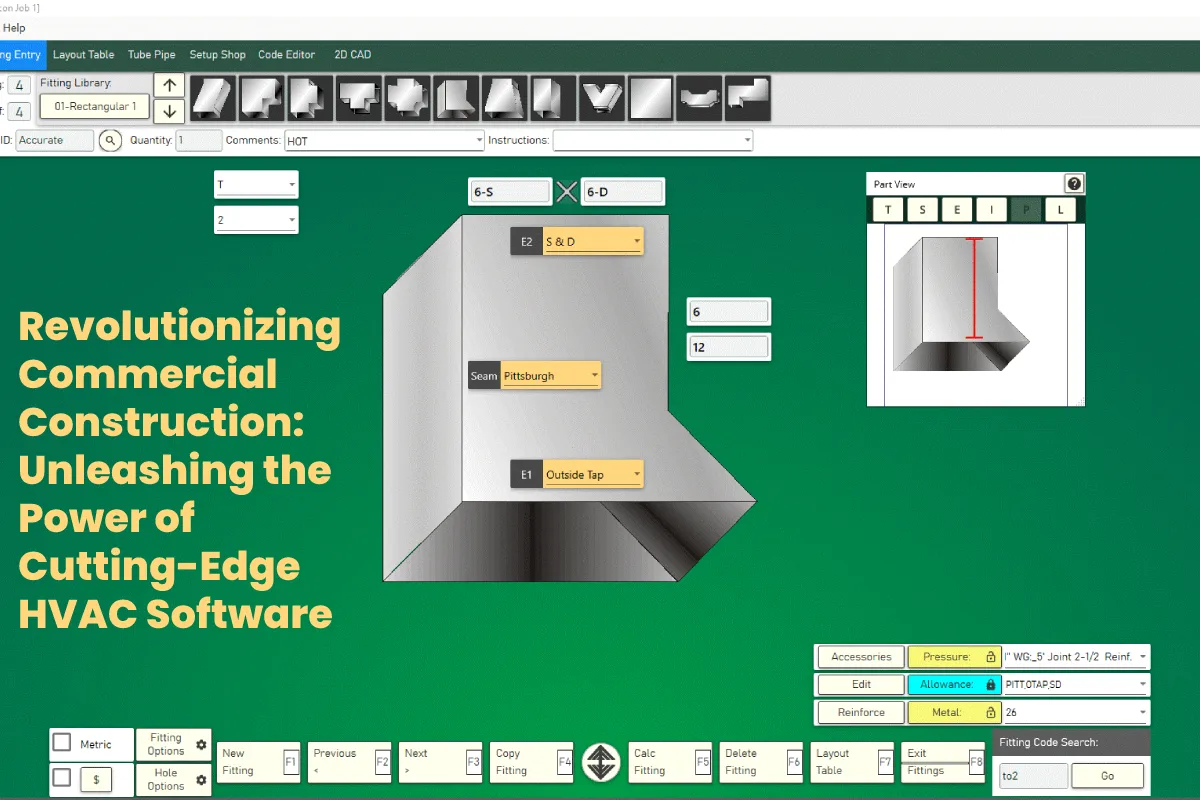
Commercial construction is entering a new era of efficiency and productivity, fueled by the integration of cutting-edge HVAC software.
Reliable HVAC software possesses transformative capabilities that help streamline operations, enhance efficiency, and elevate success in commercial construction projects.
Identifying the potential of this technological revolution in the construction landscape drives commercial construction projects’ future success.
The topic explores the impact of advanced HVAC software in the commercial construction industry.
Table of Contents
1. Streamlining Project Management
HVAC software is of significance in streamlining project management processes in commercial construction.
Advanced project management features like scheduling, task tracking, and document management enable efficient stakeholder coordination and collaboration.
The software provides a centralized platform for real-time communication, document sharing, and progress tracking.
That helps enhances project visibility, reduces delays, and ensures adherence to project timelines.
However, relying on a comprehensive commercial HVAC glossary is crucial to ease professional communication and enhance staff training.
For example, a construction company can successfully use HVAC software with comprehensive project management tools to seamlessly coordinate the installation of HVAC systems in a large-scale commercial building, meeting tight deadlines and exceeding client expectations.
2. Optimizing Resource Allocation
Integrating HVAC software enables precision in managing labor, materials, and specialized equipment. In an industry where margins are thin, the software’s ability to track inventory lifecycle and workforce utilization is critical.
-
Labor Efficiency: Workforce scheduling modules ensure the right certified technicians are on-site at the right phase of the build.
-
Inventory Management: Automated tracking of ductwork, refrigerants, and components minimizes waste and prevents project stalls due to supply chain gaps.
3. Enhancing Compliance and Regulatory Requirements
Commercial projects must navigate a dense web of local codes, ASHRAE standards, and environmental regulations. Advanced software automates this oversight.
-
Automated Audit Trails: The software generates safety inspection reports and environmental compliance documentation automatically.
-
Risk Mitigation: By maintaining digital records of equipment maintenance and safety certifications, companies significantly reduce the risk of legal liabilities and expensive regulatory fines.
4. Exceeding Stakeholder and Client Expectations
Transparency is the foundation of client trust. HVAC software bridges the gap between the mechanical room and the boardroom through enhanced reporting.
-
Client Portals: Stakeholders can access real-time project updates, milestone photos, and budget tracking.
-
Increased Accountability: Visible data on project milestones fosters a culture of transparency, leading to higher customer retention and brand reputation.
5. Improving Data-driven Decision-making
The transition from reactive to proactive management is powered by Data Analytics. Modern HVAC platforms collect granular data on energy loads, equipment performance, and operational costs.
-
Predictive Insights: By analyzing historical data, firms can predict potential system failures or cost overruns before they occur.
-
Sustainability Integration: Software-driven energy modeling allows companies to identify high-efficiency opportunities, aligning projects with LEED certification requirements and global sustainability trends.
Takeaway
Investing in reliable HVAC software is crucial to help thrive in the competitive commercial construction industry. HVAC software is a game-changer in the commercial construction industry.
It can streamline project management, optimize resource allocation, enhance compliance, meet stakeholder expectations, and enable data-driven decision-making.
By embracing advanced software solutions tailored to the industry’s specific needs, construction companies can unlock new levels of efficiency, productivity, and success in their projects while exceeding customer expectations.
Commercial HVAC Software Selection Checklist
1. Core Project & Field Management
-
[ ] BIM & CAD Integration: Can it import/export files from Revit or AutoCAD for clash detection?
-
[ ] Mobile Accessibility: Does it have a dedicated app for field technicians to view blueprints and update tasks offline?
-
[ ] Automated Scheduling: Does it support “drag-and-drop” dispatching with GPS tracking for technicians?
2. Financial & Resource Tools
-
[ ] Dynamic Estimating: Can it generate quotes based on real-time material costs from suppliers?
-
[ ] Inventory Lifecycle Tracking: Does it track parts from the warehouse to the service van to the job site?
-
[ ] Accounting Integration: Does it sync seamlessly with ERPs like Sage, Viewpoint, or QuickBooks?
3. Compliance & Technical Support
-
[ ] Built-in Regulatory Forms: Does it include pre-loaded OSHA, EPA (Section 608), and ASHRAE compliance templates?
-
[ ] Submittal Management: Can it automate the creation and tracking of technical submittal packages for engineers?
-
[ ] Integrated HVAC Glossary: Is there a built-in technical reference or “knowledge base” to assist junior staff in the field?
4. Advanced Analytics
-
[ ] Energy Modeling: Can the software simulate energy loads to justify high-efficiency equipment choices to clients?
-
[ ] Custom Reporting: Can you build automated weekly reports on labor productivity and “actual vs. estimated” costs?
2025 Top HVAC Software Comparison
| Platform | Best For | Key Differentiator | Pricing (Est.) |
| ServiceTitan | Enterprise/Scaling | The industry standard for data-driven HVAC growth; includes “Marketing Pro” for automated customer retention. | Custom (High-end) |
| BuildOps | Commercial HVAC | Built specifically for commercial/industrial workflows rather than residential service. | Custom |
| FieldEdge | Mid-Market | Deepest integration with QuickBooks; excellent for firms focused on tight financial management. | ~$100–$150/user/mo |
| Procore | Heavy Construction | Not HVAC-exclusive, but the leader for massive commercial builds where mechanical must sync with GC schedules. | Tiered (Project-based) |
| Housecall Pro | Small to Mid-Size | Best ease-of-use and fastest setup; ideal for firms transitioning from paper to digital. | Starts ~$69/mo |
Conclusion
Investing in specialized HVAC software is a strategic imperative for the modern commercial contractor. It is a fundamental game-changer that transforms fragmented workflows into a cohesive, data-driven operation. By embracing these tailored solutions, construction companies unlock unprecedented levels of productivity, ensure strict adherence to safety and environmental standards, and ultimately deliver superior value to their clients.
Frequently Asked Questions (FAQ)
Q: How does HVAC software integrate with existing architectural tools?
A: Most advanced HVAC software utilizes BIM (Building Information Modeling) integration, allowing mechanical contractors to sync their designs directly with architectural models to detect “clashes” (physical overlaps) before construction begins.
Q: Can HVAC software help in achieving LEED or Green Building certifications?
A: Yes. The software provides energy modeling and efficiency analytics that help contractors select systems and configurations that meet strict sustainability and energy-consumption criteria.
Q: Is this software suitable for small commercial contractors, or only large firms?
A: While the scale differs, the benefits of resource allocation and compliance are universal. Many cloud-based SaaS (Software as a Service) models offer scalable pricing for firms of all sizes.
Q: How does the software handle “Change Orders” in the field?
A: Technicians and project managers can update change orders via mobile apps. This automatically updates the central budget and schedule, ensuring all stakeholders are notified of cost or timeline shifts instantly.