
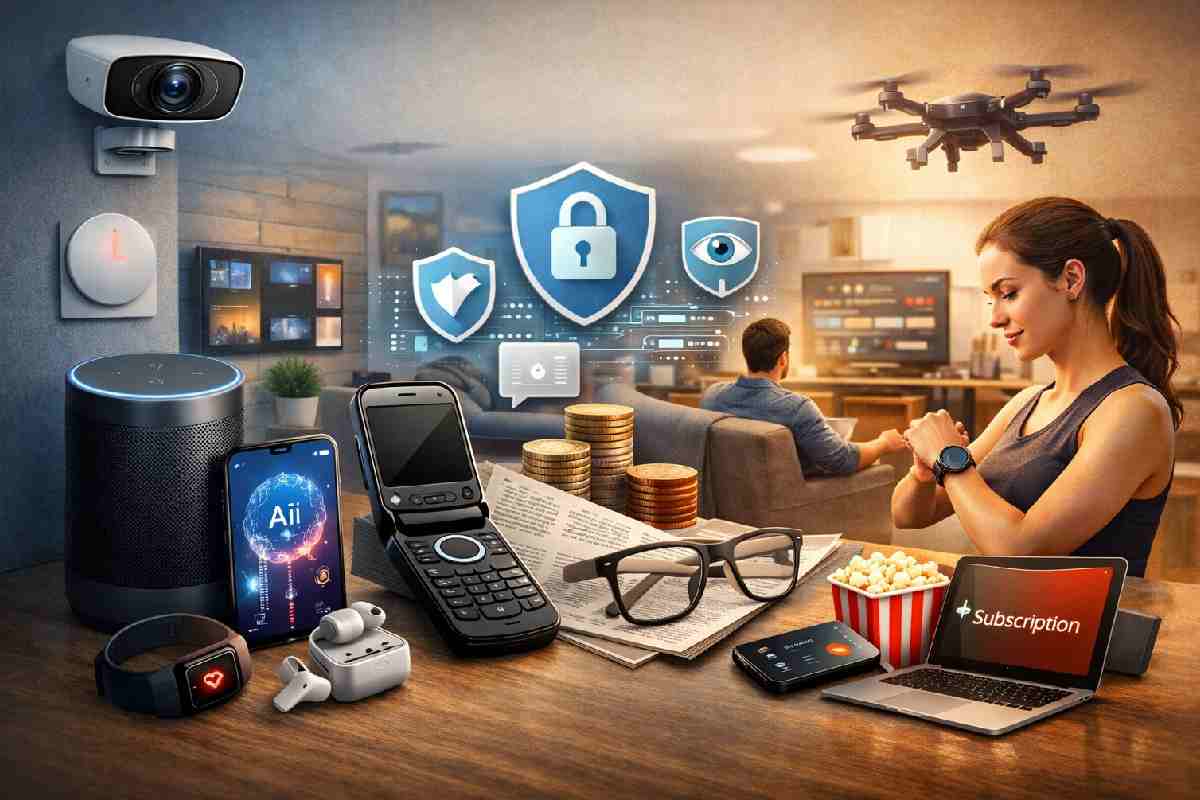
Consumer technology is moving in two directions at once: devices are becoming smarter and more automated, while many people are choosing simpler, cheaper, and more controllable tools. This article explains the trends behind that tension and what they realistically mean for everyday tech decisions.
Table of Contents
Quick Answer
Consumer technology trends describe how everyday tech is changing for real users, not just at launch events. Current shifts include practical AI in devices, growing demand for budget electronics, health-focused wearables, uneven smart-home adoption, a return to simpler tech, subscription-based ownership models, and rising privacy fatigue. Together, these trends point to usability and value taking priority over hype.
Key Takeaways
-
Consumer tech is splitting between premium innovation and affordable “good-enough” devices.
-
AI matters most when it reduces effort or improves outcomes, not when it adds complexity.
-
Wearables are expanding from fitness into health, safety, and aging support.
-
Smart homes promise convenience but often face setup, compatibility, and privacy barriers.
-
Digital fatigue is pushing some users toward simpler, distraction-limited tech.
-
Subscriptions are changing how people pay for and access device features.
-
Privacy concerns are common, but convenience often shapes real-world behaviour.
How these trends were evaluated
These trends were identified by reviewing recent consumer research reports, industry analyses, and coverage of consumer-technology adoption across devices, subscriptions, and everyday use. Emphasis was placed on patterns that consistently show up in buying behaviour and long-term usage, rather than speculative product announcements or far-future forecasts.
Top Consumer Technology Trends That Matter Right Now
1. AI in Everyday Devices (Utility Over Hype)
AI is now embedded in phones, wearables, and home devices, but expectations have shifted, with industry analysis noting that AI in smartphones and other devices only really matters to users when it improves everyday experiences rather than acting as a headline feature (for example, in reports on AI in consumer electronics and what matters to consumers in 2026).
Users tend to value AI when it improves battery life, filters notifications, enhances photos, or supports basic health insights. Labels like “AI-powered” matter less than whether a device actually makes everyday tasks easier.
Trade-off: Greater automation can reduce transparency and increase data collection.
2. Budget Electronics and “Good-Enough” Tech
Affordable devices that meet core needs are gaining attention, and research on what matters to consumers in 2026 indicates many buyers increasingly favour mid-range devices when they offer solid performance and better overall value. Many consumers opt for mid-range smartphones, entry-level TVs, and basic accessories when real-world performance differences feel limited for everyday use.
At the same time, shoppers are more sensitive to whether pricing and offers feel fair. Capgemini’s What matters to today’s consumer 2026 report notes that transparent pricing and reliable quality now sit at the heart of how people judge value, not just headline discounts.
For example, many buyers now choose mid-range smartphones that handle everyday tasks like messaging, streaming, navigation, and payments reliably, even if they skip premium camera systems or experimental features.
Trade-off: Lower prices may come with shorter support cycles, fewer updates, or build compromises.
This shift toward budget-first buying also influences how products are stocked, priced, and presented at retail, with modern POS management systems helping align inventory, promotions, and checkout flows with what consumers consistently choose.
3. Wearables for Health, Safety, and Aging
Wearables are gradually expanding beyond fitness into areas like heart-rate monitoring, fall detection, sleep tracking, and assisted-living support. Adoption appears to be growing across age groups, positioning wearables as practical health and safety tools rather than only lifestyle gadgets.
Trade-off: Accuracy can vary, and advanced features often depend on specific ecosystems or subscriptions.
4. Smart Homes: Convenience vs Setup Friction
Smart homes remain appealing, but real-world use is uneven. Setup complexity, compatibility issues, connectivity reliability, and privacy concerns often limit adoption. As a result, many households rely on a few dependable devices rather than fully automated systems.
Trade-off: Convenience may require ongoing maintenance, updates, and some data sharing.
5. Retro Tech and Digital Minimalism
Alongside smarter devices, some consumers are choosing simpler technology such as feature phones or distraction‑limited tools. Coverage of why Gen Z is buying dumb phones shows how digital minimalism is becoming a deliberate way to cut distractions, manage mental load, and regain control over attention.
In practice, some users keep a basic phone for calls and messaging while relying on a secondary device only when they need apps or navigation.
Trade-off: Simpler devices limit app access, navigation, and advanced functionality.
6. Subscription-First Consumer Technology
Many consumer devices now combine hardware with ongoing subscriptions or content bundles. Features in cars, TVs, wearables, and home devices may be unlocked or expanded through recurring fees, shifting costs from upfront purchases to long-term commitments.
Trade-off: Ongoing updates and flexibility versus recurring costs and potential lock-ins.
7. Privacy Fatigue and “Good-Enough” Trust
Privacy concerns are widely discussed, yet many users continue using platforms and devices they do not fully trust because they are convenient or embedded in daily routines. Long policies and complex settings often discourage active privacy management.
Not every market or user group adopts these trends at the same pace, and some households deliberately opt out of connected devices altogether.
Trade-off: Awareness without action, with convenience outweighing control.
Key Contradictions Shaping Consumer Tech
These contradictions reflect how consumer technology adoption is shaped as much by cost, effort, and habit as by innovation itself.
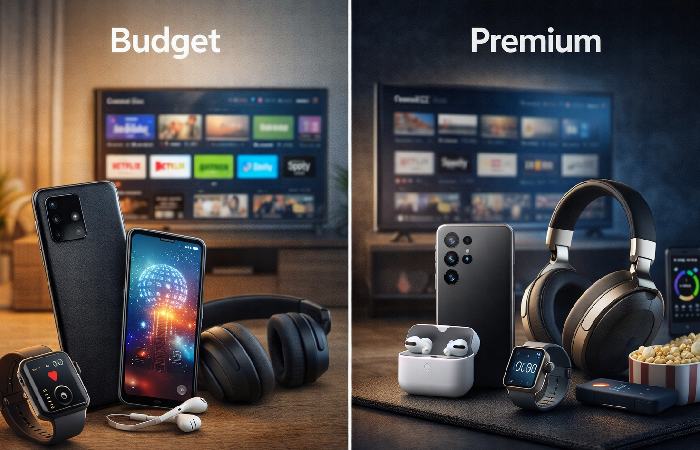
The table below highlights the most common tensions shaping consumer tech choices today.
| Trend Direction | Counter-Trend |
|---|---|
| Smarter, AI-driven devices | Simpler, distraction-free tech |
| Sustainability messaging | Disposable buying behaviour |
| Premium innovation | Budget mass adoption |
| Privacy awareness | Convenience-driven acceptance |
In practice, many consumers navigate these tensions by mixing choices rather than fully committing to one side.
What many consumer tech trend lists miss
Many trend articles focus on what technology can do, not how people actually use it. In practice, adoption is shaped by cost, setup effort, habit fit, and ongoing subscriptions. Trends that ignore these constraints often look impressive on paper but stall in everyday use.
What These Trends Mean for Everyday Consumers
Across markets, a few patterns appear repeatedly:
-
Cost and total ownership matter: Upfront price, repairability, and subscription commitments influence decisions.
-
Mid-range often feels sufficient: For everyday tasks, mid-range devices usually meet needs.
-
Practical benefits beat novelty: Battery life, durability, and service access often matter more than experimental features.
-
Context shapes adoption: Age, lifestyle, work patterns, and connectivity affect how trends play out.
Pros and Cons of Current Consumer Tech Trends
Pros
-
More capable features at lower price points.
-
Better device integration when ecosystems work smoothly.
-
Greater choice between fully smart, partially connected, or intentionally simple setups.
Cons
-
Increasing complexity in managing devices, apps, and subscriptions.
-
Ongoing privacy and data-collection concerns.
-
Risk of digital fatigue if technology use is not managed intentionally.
Who This Is For (and Who Should Be Careful)
Best suited for
-
Readers tracking how consumer technology is changing in the near future.
-
Professionals working on or around consumer-facing tech.
-
Users deciding whether to upgrade, simplify, or change subscriptions.
Might not suit
-
Readers seeking detailed reviews of specific devices or brands.
-
Highly technical audiences looking for deep hardware or engineering analysis.
How to Get Started Thinking About These Trends
A simple approach can help:
-
List your current devices and subscriptions.
-
Identify what genuinely helps versus what you rarely use.
-
Review recurring costs and cancel underused add-ons.
-
Decide where automation helps and where simplicity is better.
-
Before upgrading, consider whether you will use the feature regularly.
The aim is for technology to support habits and budgets, not quietly dictate them.
Signals worth watching next
Rather than predicting specific products, it’s more useful to watch a few signals: whether AI features remain bundled or move behind paywalls, how quickly subscription fatigue affects renewals, and whether simpler devices continue gaining attention alongside smarter ones.
FAQs
What are the latest consumer technology trends?
They include practical AI in devices, budget-friendly electronics, health-focused wearables, selective smart-home adoption, subscription-based features, digital minimalism, and privacy fatigue.
Why are budget electronics becoming popular?
Many budget and mid-range devices offer acceptable performance for everyday tasks at a lower cost, making the price-to-benefit trade-off appealing.
Are smart homes worth it right now?
Smart devices can be useful for specific tasks, but full automation remains uncommon due to setup and privacy challenges.
How is AI changing consumer devices?
AI is often used behind the scenes to improve photos, filter spam, recognise voice commands, and optimise battery use.
What should I consider before subscribing to device features?
Check how often you’ll use the features, how easy cancellation is, and what still works if you stop paying.
Conclusion
Consumer technology trends are no longer moving in a single direction. Smarter devices, lower prices, subscription models, and growing privacy fatigue are shaping adoption at the same time, often in tension with one another. The trends that last are those that reduce friction, fit real budgets, and deliver clear everyday value.
Disclaimer
This content is for general informational purposes only and does not constitute legal, financial, health, or professional advice. Readers should evaluate products and services based on their own needs and circumstances.
Author Bio
Technologyford publishes practical, easy-to-understand content on technology and business. Articles prioritise clarity and real-world usefulness over jargon, with AI tools used only to support research, structure, and editing.
Methodology
This article is based on publicly available industry reports, consumer surveys, trend analyses, and coverage of recent consumer-technology developments. Details, pricing, and adoption patterns can change, so readers should verify current information from primary sources.