
Table of Contents
Introduction
For years, technical hiring in the technology sector followed a familiar pattern. Candidates completed coding challenges, solved algorithmic problems, and demonstrated their programming knowledge through technical interviews. While these methods remain valuable, many employers have discovered a significant gap between technical assessment performance and long-term workplace success.
A candidate may excel at solving coding puzzles yet struggle to collaborate with teammates, communicate ideas clearly, adapt to changing priorities, or approach complex business problems effectively. As software development becomes more collaborative and multidisciplinary, organizations are rethinking how they evaluate talent.
Recent research supports this shift. According to LinkedIn’s Global Talent Trends Report 2025, employers are placing greater emphasis on soft skills, adaptability, communication, and collaboration during hiring decisions. Structured interviews and behavioral assessments have also become more common components of technology recruitment processes.
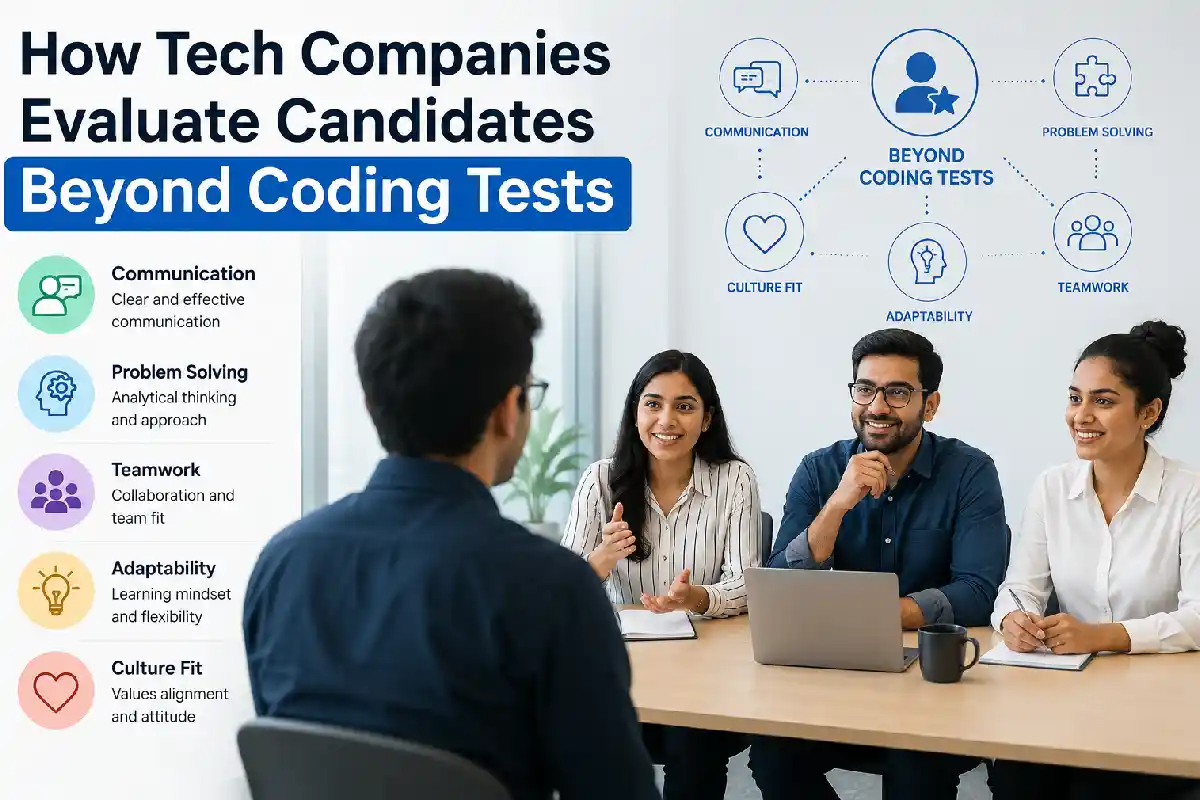
As a result, employers are moving beyond purely technical evaluations and adopting broader assessment strategies that provide a more complete picture of candidate potential. From project simulations and behavioral interviews to collaborative exercises and AI-assisted evaluation tools, technology companies are building hiring systems that measure both technical competence and workplace effectiveness.
The Limitations of Technical Tests Alone
Technical assessments serve an important purpose. They help verify coding ability, identify foundational knowledge, and establish whether candidates possess the skills required for a specific role.
However, relying exclusively on technical tests can create blind spots.
Software engineering rarely involves solving isolated algorithmic challenges under time pressure. Most engineering work requires employees to communicate with stakeholders, collaborate with colleagues, troubleshoot ambiguous problems, and learn new technologies throughout their careers.
Research from HackerRank’s State of Technical Hiring Report found that many employers were dissatisfied with relying solely on coding tests when evaluating candidates. Organizations reported adopting project-based assessments and simulation exercises because traditional testing often failed to reveal broader workplace competencies.
Several important qualities may be overlooked when hiring decisions depend primarily on technical assessments:
- Communication skills
- Teamwork and collaboration
- Adaptability
- Learning agility
- Problem-solving approaches
- Decision-making under uncertainty
- Leadership potential
- Emotional intelligence
A technically strong candidate who lacks these qualities may struggle after being hired, leading to productivity issues, team conflicts, or turnover.
For recruiters and hiring managers, this creates an important question: How can organizations identify candidates who will thrive not only as coders but also as long-term contributors?
Why Soft Skills Matter More Than Ever
Technology teams operate differently than they did a decade ago. Engineers regularly work alongside product managers, designers, data analysts, customer success teams, and executives.
Success often depends on a person’s ability to communicate technical concepts in a way others can understand.
According to LinkedIn Learning’s Workforce Learning Report 2025, leadership, communication, and adaptability rank among the fastest-growing workplace skills. Employers are also placing greater value on learning agility—the ability to acquire new skills and adjust to changing demands.
This trend reflects a simple reality. Technologies evolve quickly. Programming languages, frameworks, and development tools change over time. An employee’s ability to learn and adapt may ultimately have a greater impact on long-term success than expertise in a specific tool.
Organizations that evaluate broader competencies during hiring are often better positioned to build resilient teams capable of handling future challenges.
The Rise of Project Simulations
One of the most notable changes in technical hiring is the growing use of project simulations.
Instead of asking candidates to solve abstract coding puzzles, employers are presenting work scenarios that closely resemble actual job responsibilities.
These exercises may include:
Building Feature Prototypes
Candidates may be asked to create a small application feature, improve existing functionality, or troubleshoot a realistic bug.
This allows hiring teams to observe:
- Coding practices
- Architecture decisions
- Documentation habits
- Testing approaches
- Problem-solving methods
Debugging Existing Systems
Many organizations now provide candidates with partially completed projects and ask them to identify issues or implement improvements.
This mirrors the day-to-day work engineers encounter after joining a team.
Handling Ambiguous Requirements
Project simulations often introduce incomplete requirements, forcing candidates to ask clarifying questions and make thoughtful decisions.
This reveals how individuals approach uncertainty—a skill that traditional coding tests rarely measure.
According to Codility’s Developer Hiring Trends Report 2025, employers are showing a stronger preference for coding environments that resemble actual workplace conditions rather than relying solely on algorithm-focused testing.
Behavioral Interviews Are Becoming Standard Practice
Behavioral interviews have become another major component of technology hiring.
These interviews focus on past experiences rather than hypothetical situations. The idea is simple: previous behaviors often provide useful insight into future performance.
Organizations adopting structured interviewing methods frequently use questions designed to uncover examples of communication, teamwork, conflict resolution, and adaptability.
Recruiters interested in implementing stronger behavioral interviewing best practices often focus on consistent questioning frameworks that allow candidates to demonstrate how they handled real workplace situations.
Common Areas Explored During Behavioral Interviews
Collaboration
Interviewers may ask candidates to describe projects involving cross-functional teams.
Conflict Resolution
Candidates may be asked how they handled disagreements with coworkers, managers, or stakeholders.
Adaptability
Employers often explore situations where priorities changed unexpectedly.
Problem Solving
Rather than evaluating the final answer alone, interviewers examine how candidates approached complex challenges.
When conducted consistently, behavioral interviews can reveal valuable insights that technical tests alone cannot provide.
Collaborative Exercises Offer Additional Context
Many technology employers now incorporate collaborative exercises into the hiring process.
These activities evaluate how candidates work with others rather than how they perform independently.
Pair Programming Sessions
Pair programming remains one of the most effective methods for observing communication and collaboration.
During these sessions, candidates work alongside an interviewer or team member to solve problems together.
Hiring teams can evaluate:
- Listening skills
- Communication clarity
- Feedback acceptance
- Technical reasoning
- Teamwork behaviors
Group Problem-Solving Activities
Some organizations facilitate small group discussions or workshops where candidates collaborate on technical or business challenges.
These exercises can highlight leadership tendencies, participation levels, and interpersonal effectiveness.
Design Discussions
Rather than focusing exclusively on code, design conversations allow candidates to explain their thought process while engaging with feedback from others.
This provides insight into both technical expertise and communication ability.
AI-Assisted Evaluation Tools Are Expanding
Artificial intelligence is also playing a larger role in candidate assessment.
According to Gartner’s Future of Recruiting Report, many recruiting leaders have identified candidate quality assessment and skills validation as top priorities. AI-assisted evaluation technologies are being adopted to support these efforts.
AI tools can help organizations:
- Analyze interview responses
- Standardize evaluation criteria
- Identify assessment patterns
- Reduce administrative workload
- Improve consistency across hiring teams
However, AI should be viewed as a support mechanism rather than a replacement for human judgment.
The most effective hiring systems combine technology with thoughtful human evaluation. AI can surface useful information, but hiring managers still need to interpret context, assess cultural fit, and make final decisions.
Organizations should also monitor AI systems for potential bias and maintain transparency regarding how candidate data is evaluated.
Closing Evaluation Gaps Through Balanced Hiring Systems
A common challenge in hiring is balancing technical validation with broader competency assessment.
Some organizations overemphasize technical testing, while others focus too heavily on soft skills.
The strongest hiring systems typically combine multiple assessment methods.
A balanced evaluation process may include:
- Initial skills screening
- Technical assessment
- Project simulation
- Behavioral interview
- Collaborative exercise
- Team interview
- Reference checks
Each stage contributes a different perspective on candidate suitability.
This layered approach helps reduce hiring risk while providing a more complete understanding of individual strengths and development areas.
The Impact on Hiring Outcomes
Organizations that broaden their assessment methods often report better hiring outcomes.
Codility’s research found that companies evaluating communication and teamwork alongside technical ability experienced stronger hiring results. Similarly, LinkedIn research highlights the growing value employers place on collaboration and adaptability during recruitment.
Broader evaluation systems can contribute to:
- Improved employee retention
- Better team collaboration
- Faster onboarding
- Stronger leadership pipelines
- Higher employee engagement
- Greater workforce flexibility
These outcomes are particularly important in technology environments where projects frequently require cross-functional cooperation and ongoing learning.
For employers seeking practical guidance, reviewing proven sources of employee hiring advice for employers can help strengthen hiring frameworks and reduce common evaluation mistakes.
Practical Advice for Building Better Candidate Evaluation Systems
Technology hiring is evolving because employers recognize that technical excellence alone does not guarantee workplace success.
To create more balanced evaluation systems, recruiters, HR professionals, and engineering leaders should consider several practical steps:
Define Success Beyond Coding Ability
Identify the communication, teamwork, adaptability, and problem-solving skills that contribute to success within your organization.
Use Multiple Assessment Methods
Avoid making hiring decisions based on a single interview or test.
Standardize Evaluation Criteria
Create structured scorecards that measure both technical and interpersonal competencies.
Train Interviewers
Consistent interviewer training improves reliability and reduces subjective decision-making.
Review Hiring Outcomes
Track employee performance, retention, and promotion data to determine whether current assessment methods accurately predict success.
Use AI Thoughtfully
Leverage AI tools to support evaluations while maintaining human oversight throughout the hiring process.
Conclusion
Technology employers are moving beyond traditional coding assessments because technical skills alone rarely provide a complete picture of candidate potential. Communication, adaptability, teamwork, learning agility, and problem-solving all contribute significantly to workplace performance and long-term success.
To address evaluation gaps, organizations are adopting project simulations, behavioral interviews, collaborative exercises, and AI-assisted assessment tools. These methods allow hiring teams to observe how candidates think, communicate, learn, and collaborate in situations that more closely reflect workplace responsibilities.
Research from LinkedIn, HackerRank, Codility, Gartner, and LinkedIn Learning points to the same conclusion: balanced evaluation frameworks produce stronger hiring outcomes than technical testing alone.
For recruiters, engineering managers, and HR professionals, the path forward is clear. Build hiring systems that assess both technical competence and human capability. By combining multiple assessment methods and evaluating a broader range of skills, organizations can make more informed hiring decisions and create teams that perform well long after the interview process ends.