
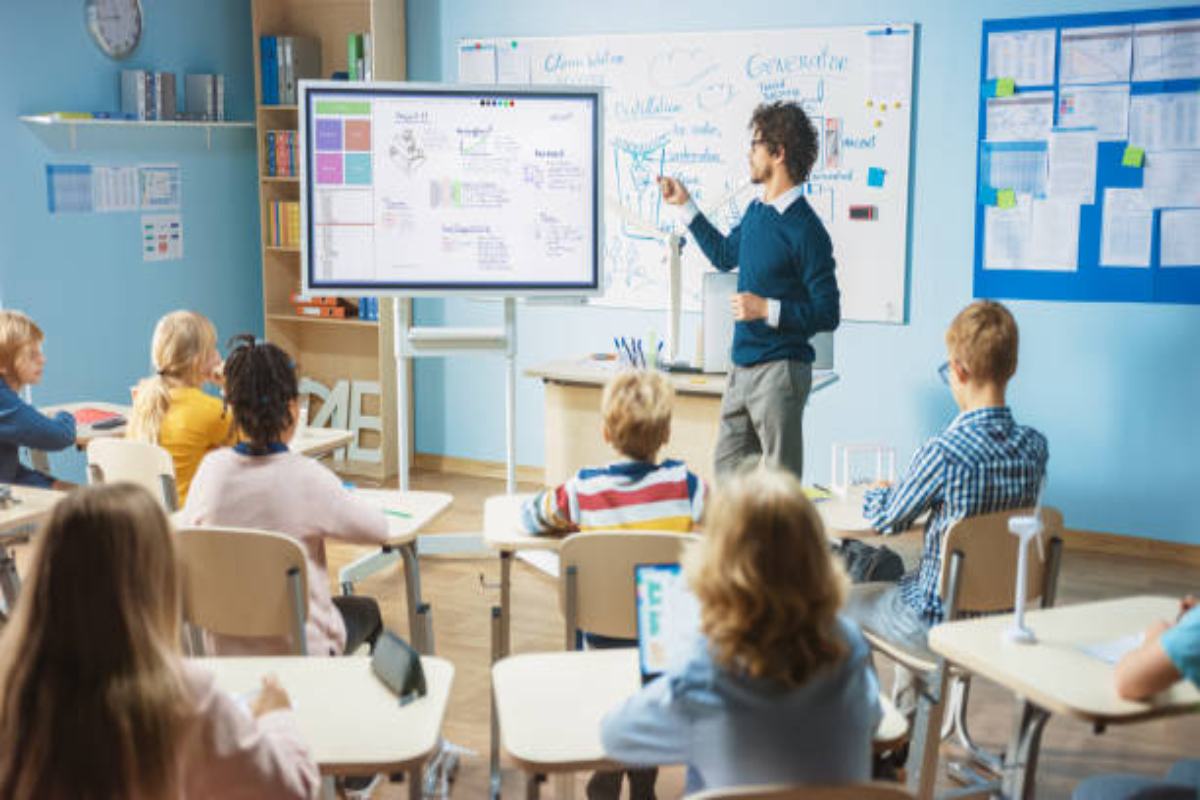
Ah, the overhead projector. A relic of a bygone era, perhaps, but for many of us, it represented the pinnacle of classroom technology. How quaint it seems now, viewed through the lens of our hyper-connected, digitally driven world. Times have changed, and so has the classroom! Technology isn’t just an add-on anymore; it’s increasingly the heart of modern learning.
In this era of enhanced technological development, it is apparent that it will reach the classrooms as well to make it better. Rapid changes are coming in the educational system and newer ways of teaching are taking their place. A few examples of new things for learning we have in modern classrooms, that we owe completely to technology are blended learning, connectivity, mobile learning, etc. It is important for the kids to become familiar with those.
While online learning is taking up the center stage of the education system, technological advancements have become even more crucial. Right from one’s living room, one can learn almost anything online. Famous online learning platforms use their advanced software for teaching the students better, and teachers have also adopted it. For instance, remote learning incorporates tutors for conversational sessions, quizzes, and games for making their subjects easier for the students to understand. In this article, we are going to discuss the most popular uses of new technology in modern classrooms.
In this exploration, we’re diving into the multifaceted ways technology is shaking up education. We will consider its origins, the chorus of voices chiming in on its impact, the inherent challenges, and a glimpse into the exciting possibilities that lie ahead.
Table of Contents
The Six Superpowers: How Tech Transforms Learning Today
#1 Projectors
We can not say that projectors are a new technology, but their use in classrooms is a new idea for sure, especially to project multimedia presentations or lecture notes. However, much more can be done with it. They can be easily hooked in a corner of the classroom, facing a screen where the images can be displayed.
#2 Smartboards
The use of traditional blackboards had its disadvantages over the years. And now, they are slowly getting replaced. The difference in technology has also crept into smartboards as well. Some of them can be used just as a primitive blackboard to write on them with digital markers. Whatever is written on a smartboard can be recorded for later use. And in some smartboards, there is a wide range of tools that can be used by tutors while teaching. It is evident that within a few years, smartboards will surpass the present ones in terms of technology.
#3 Smart Tables
Smartboards are mainly used by teachers. Smart tables are for the students. They are lesser-known than the former one but it is becoming a very useful tool in classrooms around the world. The main function of these tables is to gather information from the board or the wall to a digital table for students. The modern touch tables can handle up to 40-50 touch points at a time. This is undoubtedly a fun object for children to learn better.
#4 Electronic Gadgets such as Smartphones, Computers, and Tablets
The use of various kinds of electronic gadgets in modern education has become very common in the modern education system. Mainly in developed countries, the use of a computer for better learning is familiar. For portability purposes, the use of tablets and smartphones has also expanded.
Leaving aside online learning where having gadgets is so important, the use of them in physical classrooms can not be refuted.
For attaining video lectures, these gadgets are used. The internet has become a huge part of our knowledge with that a student can easily have access to it.
#5 Cameras
Having a camera is as important for the students as getting access to the internet. Often, they come already installed with their laptops, smartphones, and other tools.
For attaining online classrooms in different online learning platforms, the camera becomes extremely significant.
If we talk about even more technologically advanced classrooms, they use high-quality cameras attached to their smartboards and projectors, which opens up a wider spectrum of education and classroom experience to the students. Cameras also keep a video record of the previous class sessions, so that students can use them again later.
#6 Digital Textbooks
Digital textbooks are becoming a must in all classrooms for technologically advanced countries. Using digital textbooks cuts the expenses of manual textbooks.
Talking about the United States alone, schools and universities had started to install “open source” digital textbooks in all their classrooms, replacing the traditional paper-made textbooks. The most prominent advances of digital textbooks are that students are not entitled to the huge expenses of physical textbooks and on top of that, they are free from carrying those heavy loads of books every day for their classes.
A Blast from the Past: Technology’s Journey in the Classroom
The OG Tech
The chalkboard (1801) and magic lanterns (1870s) served as early tools for instruction. The advent of educational films (1900s) and school radio broadcasts (1920s) signaled a shift towards audiovisual learning.
Audiovisual Revolution
The overhead projector (1930s), initially a military tool, found its way into classrooms. Classroom TV (1939), language labs with headphones (1950s), photocopiers (1959), and the trusty calculator (1972) further expanded the technological landscape.
Hello, Computer Age!
The introduction of early educational programming languages like BASIC (’64) and LOGO (’67) paved the way for Computer-Assisted Instruction (CAI) in the ’70s. The arrival of personal computers (Apple II in ’77, IBM PC in ’81) marked a turning point.
The Internet Takes Over
The internet’s penetration into schools (35% by ’94, 99% by 2002) revolutionized access to information. Online courses (first in ’86!) and Learning Management Systems (Blackboard in ’97) transformed the learning experience. Interactive whiteboards (SMARTboard in ’91) facilitated engaging classroom interactions.
The Mobile & Smart Era
The “Dynabook” vision (1968) materialized in the form of smartphones. AI entered the educational arena, with early programs like ELIZA (’66) leading to adaptive platforms like Khan Academy (2011). VR/AR technologies, exemplified by Oculus Rift and Google Expeditions, offered immersive learning experiences.
The Big Shift
This historical progression reveals a fundamental shift from teacher-centric instruction to student-driven learning journeys.
The Great Debate: What Do Teachers, Students, and Parents Really Think?
Teachers: Loving It (Mostly!)
Appreciate enhanced student engagement, personalized learning, access to resources, and skill-building.
Grapple with glitchy tech, outdated equipment, inadequate training, the digital divide, curriculum integration challenges, and concerns about AI.
Students: Engaged & Excited!
Embrace technology, finding it engaging, personalized, and empowering. Recognize its potential to enhance critical thinking and prepare them for the future. Acknowledge drawbacks of tech glitches and the need for reliable internet access.
Parents: Hopeful, But Wary
Recognize potential benefits, especially for future careers. Harbor concerns about excessive screen time, distractions, replacement of traditional methods, the digital divide, and AI’s impact on critical thinking and social skills.
The Dark Side of the Screen: Controversies in EdTech
Distraction Nation
Devices can be a double-edged sword, potentially disrupting focus and hindering academic performance.
Health Check: Eye Strain, Brain Drain, & Social Strain
Concerns exist regarding the physical and mental health implications of excessive screen time.
The Unfair Advantage: Cost & The Digital Divide
Unequal access to technology can exacerbate existing educational disparities.
Teachers on the Front Lines
Many teachers lack the training and support necessary to effectively integrate technology into their instruction.
Are We Getting “Too Smart”? Over-reliance & Skill Erosion
Over-dependence on technology may hinder the development of critical thinking and problem-solving skills.
Who’s Watching? Privacy & Security Nightmares
Student data privacy and cybersecurity are paramount concerns.
The Never-Ending Upgrade Cycle
The rapid pace of technological change requires ongoing investments in upgrades and maintenance.
Crystal Ball Gazing: The Future of Tech in the Classroom
1. AI as Your Personal Learning Genie
Adaptive AI tutors, automated grading systems, and generative AI content creation hold immense promise.
2. Dive In! Virtual & Augmented Reality
Immersive VR/AR experiences will transport students to new worlds and facilitate hands-on learning.
3. Blockchain: The Ultimate Record Keeper
Blockchain technology can ensure secure and transparent academic records.
4. Byte-Sized Brilliance: Microcredentials & Digital Badges
Flexible, skill-specific certifications will cater to career-focused learning.
More Cool Stuff Coming
Hybrid learning models, learning analytics, gamification, enhanced cybersecurity, cloud-based learning environments, social learning platforms, and upskilling/reskilling initiatives will further transform education.
The Bottom Line: Smart Tech, Smart Future
In conclusion, technology has indelibly transformed the classroom, evolving from simple tools to sophisticated AI-powered systems. While opinions are divided and challenges persist, the potential of technology to empower learners is undeniable. The key lies in thoughtful integration, robust support, and a focus on student well-being. By embracing these principles, we can unlock the transformative power of technology and build a future where every learner thrives.