

Cloud monitoring is essential for managing the complexity of cloud environments, ensuring smooth operation, security, and cost-effectiveness. It involves continuously tracking, evaluating, and proactively managing all aspects of a cloud environment to understand performance, identify issues, and anticipate disruptions.
The importance of data has grown manifold. People and machines generate jaw-dropping amounts of data every minute, with videos watched on YouTube, searches on Google, payment transactions made, appliances communicating with smartphones and more. The digital universe was estimated to have 44 zettabytes (44 followed by 21 zeros!) of data in early 2020. This is expected to grow to 463 exabytes (463 million trillion) of data being generated every day by 2025.
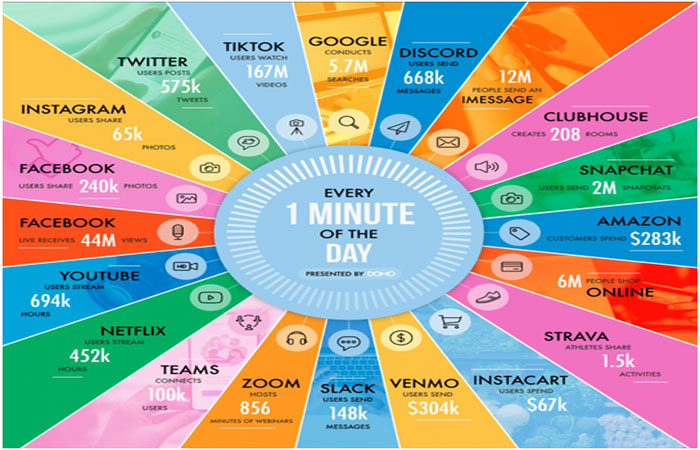
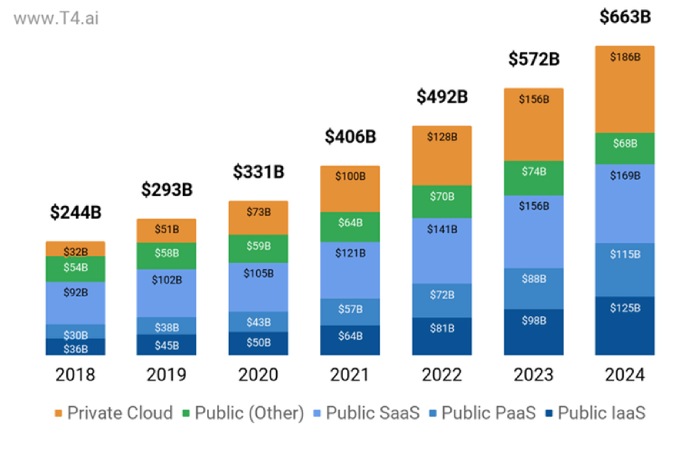
The data yields valuable insights for making more prudent business decisions. However, not all companies have the resources or capabilities to store massive amounts of data on local servers. Here’s where cloud computing comes to your rescue. No wonder cloud computing generated a whopping $400 billion in revenues in 2021, and the trend does not show any signs of slowing.
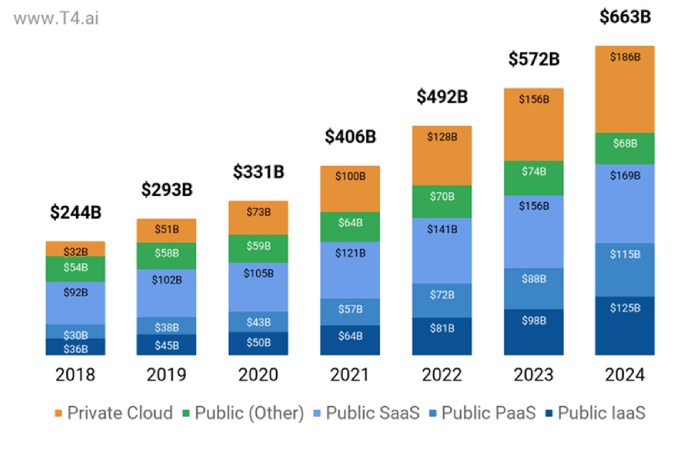
With the rapid expansion of the cloud, it’s important to use monitoring tools to assess the performance and safety of your cloud-based infrastructure and make it more powerful, secure and cost-effective. So, here are some of the most popular cloud monitoring tools that can help you make decisions and identify issues before they turn into significant problems.
Table of Contents
What Exactly *Is* Cloud Monitoring?
Cloud monitoring is a dynamic, continuous process that tracks, evaluates, and proactively manages cloud environments. It encompasses six core functions:
1. Performance Monitoring
Tracks vital signs like CPU usage, memory utilization, application response times, and database health to assess overall cloud well-being.
2. Network Monitoring
Acts as air traffic control for the cloud, monitoring traffic flow, detecting latency spikes, and identifying network-based security threats to ensure swift and secure data packet delivery.
3. Security & Compliance Monitoring
Serves as a digital alarm system, monitoring for unauthorized access, potential data breaches, and ensuring compliance with industry regulations. Cloud-native SIEMs are crucial for this.
4. Storage Monitoring
Ensures sufficient data storage capacity, efficient data access, and the absence of bottlenecks, optimizing storage performance.
5. Cost & Resource Optimization
Identifies hidden cloud expenses, uncovers underutilized resources, and prevents unnecessary spending in a pay-as-you-go model, maximizing the value of cloud investments.
6. User Experience Monitoring
Focuses on user satisfaction by tracking website availability, measuring response times, and gauging overall user satisfaction to understand the real-world impact of cloud infrastructure.
A Quick History of Keeping Tabs
The evolution of IT monitoring spans from manual processes to sophisticated AI-driven systems:
Pre-Cloud Era (“Good Old Days”)
Monitoring was manual, involving technicians reviewing basic log files. The Unix revolution introduced tools like `Syslog`, `vmstat`, and `top`.
Dawn of Networked Watching (1990s-Early 2000s)
The internet boom led to the development of more sophisticated solutions like Nagios, Zabbix, and early Application Performance Management (APM) tools to monitor servers and networks.
Cloud Explosion! (Late 1990s – 2010s)
The advent of SaaS (e.g., Salesforce) and IaaS (e.g., AWS) necessitated new approaches. Cloud providers developed their own solutions like AWS CloudWatch, Azure Monitor, and Google Cloud Monitoring.
Age of Observability (Mid-2010s – Present)
The focus shifted to understanding *why* issues occur, leading to new-generation APM, open-source tools like Prometheus, Grafana, and the ELK stack, and unified data collection.
Current State of Affairs: The Good, The Bad, and The “Uh-Oh”
Cloud monitoring is now widely recognized as essential for business success, cost optimization, security, and user satisfaction. Best practices include monitoring everything, prioritizing key metrics, unifying data, automating alerts, fostering collaboration, and refining strategies. The rise of FinOps highlights the integration of financial considerations.
Controversy Corner
- Vendor Lock-in vs. Freedom: Debate exists on using single-cloud provider tools versus multi-cloud third-party solutions.
- Logging Overload: The sheer volume of log data makes it difficult to identify critical security threats, questioning the effectiveness of cloud-native SIEMs.
- “Is My QoS Guaranteed?”: The shared nature of cloud environments raises questions about guaranteed Quality of Service (QoS).
Nitty-Gritty Challenges
- Ephemeral Nature: Constantly scaling and changing cloud resources are difficult to monitor.
- Complexity: Multi-cloud and hybrid environments create complex architectures that are hard to monitor holistically.
- Data Deluge: Processing and analyzing massive amounts of cloud data requires sophisticated tools.
- Monitoring Costs: The cost of monitoring can sometimes rival the cost of downtime.
- Tool Sprawl: Proliferation of monitoring tools leads to integration challenges.
- Skills Gap: A shortage of professionals skilled in managing complex cloud monitoring systems exists.
Cloud Management and Monitoring Tools to Definitely Check Out
Amazon CloudWatch
This tool runs on AWS (Amazon Web Services)and helps to monitor cloud resources and applications real time. You can track metrics on Amazon EC2 (Elastic Compute Cloud) instances, EBS (Elastic Block Store) volumes, RDS (Relational Database Service) instances and elastic load balancing. While it automatically collates metrics for some parameters, you can assign additional metrics to be monitored.
Amazon CloudWatch is very helpful in setting up alarms and viewingdata in the form of graphs.You can view metrics from over 70 distributed AWS applications in one place. It does not require you to install any additional software. However, with different prices for different features, this solution can work out to be quite costly.
Microsoft Cloud Monitoring
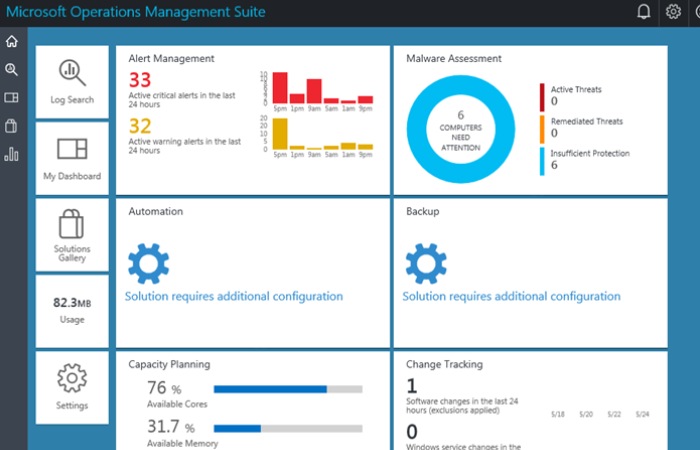
Are you running your applications on Microsoft Azure? Then, it’s a good idea to check out Microsoft Cloud Monitoring, which is also known as Microsoft’s Operation Management Suite (OMS). It is relatively easy to set up and does not require a lot of technical expertise to configure. It scales easily from single to multiple virtual servers and virtual machine instances.
OMS is great for getting quick insights across workloads as well as identifying security threats. You don’t need to download any additional software and it is fairly cost efficient.
AppDynamicsCloud
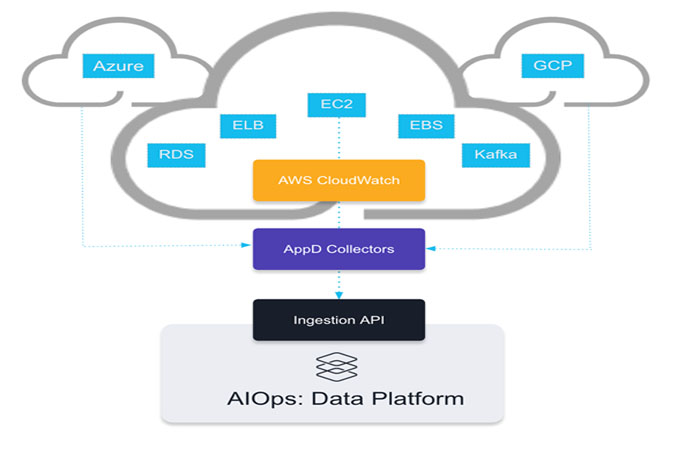
AppDynamics was acquired by Cisco Systems early 2017. The APM (application performance management) tool works exceptionally well for gaining control of cloud applications in IaaS and PaaS platforms, like AWS, Microsoft Azure, and Pivotal Cloud Foundry. It is easy to use and provides visibility into the app environment and automated remediation, enabling faster detection and mitigation of issues. AppDynamics Cloud has a free trial, but there is no subscription-based pricing, which can be expensive for smaller companies.
Auvik
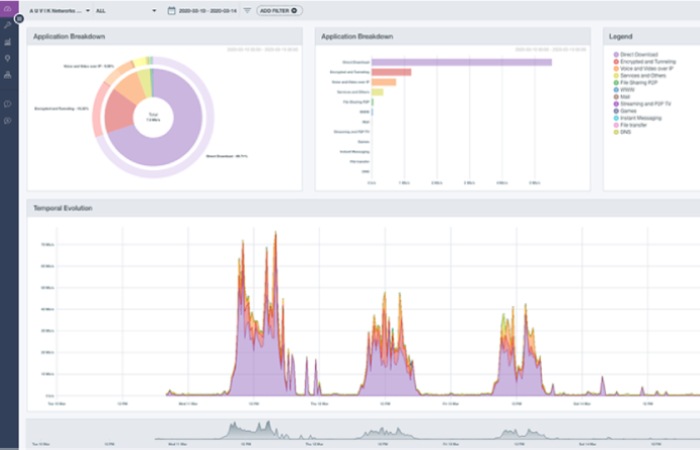
This is a cloud-based network monitoring and management tool that comes with features for automating network visibility and IT asset management. It simplifies troubleshooting and lets you automate configuration backup and recovery.Auvik provides visual maps of data, making it easy to drill down. It is easy to add new sites and networks as well as customize alerts. However, the tool slows down when used in a large environment.
New Relic APM
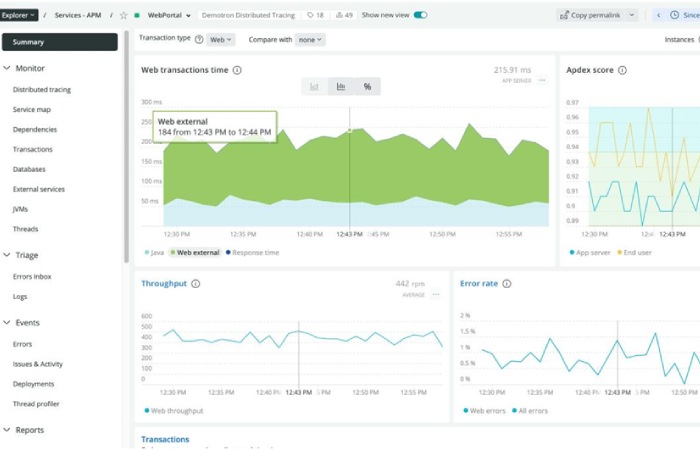
New Relic is a good tool for managing complex and dynamic cloud applications and infrastructure. It is great for isolating issues and resolving them quickly.It works on the browser as well as on Android and iOS devices and allows to scale operations with usage.New Relic’s dashboard is easy to customize, and you can configure your own alerts and warnings. The tool allows a deep drill down of data to specifics. However, the mobile app version leaves much to be desired.
DataDog
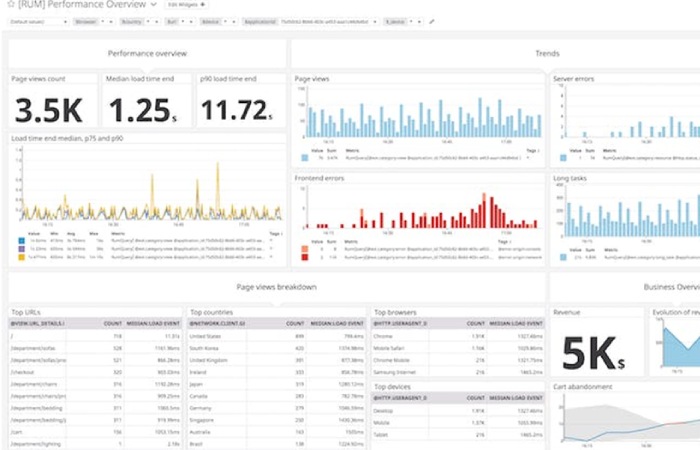
This offers a range of products for like log management, infrastructure monitoring, application performance management and security monitoring, depending on the pricing plan selected. DataDog supports multi-cloud monitoring and can work with AWS, Azure, and Google cloud services. It offers a feature known as Continuous Code Profiling that offers exceptionally high visibility into resource allocations in production. However, it is quite an expensive monitoring tool.
Some of the other cloud monitoring tools are BMCTrueSight Cloud Operations, CloudMonix, Dynatrace, ExopriseCloudReady, PagerDuty, ScienceLogic and SolarWinds. To remain competitive in today’s highly digitalized world, it’s crucial to remain on top of technological advancements and be able to integrate and interact with data.