
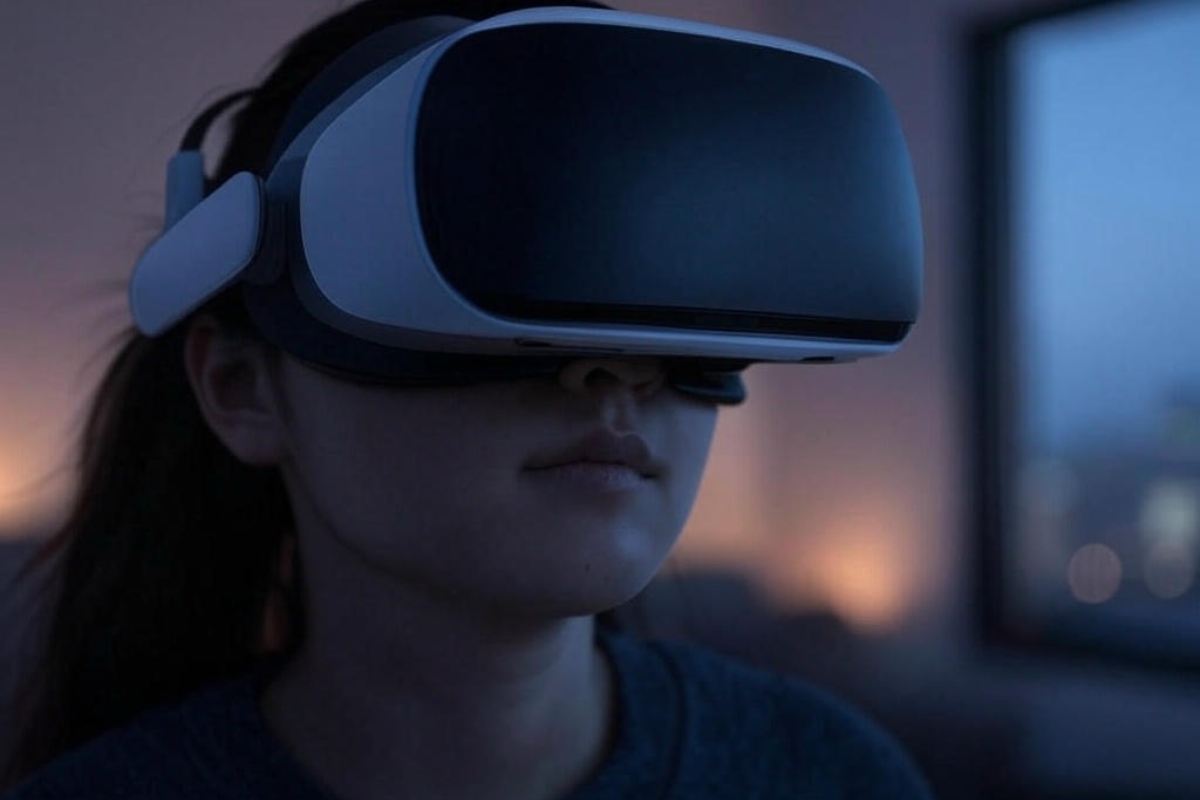
Ever wonder why it feels like Virtual Reality (VR) has been “about to happen” for decades? I remember the blocky, headache-inducing headsets of the late 90s. They were clunky and expensive, and honestly, they didn’t quite deliver on the promise.
But as we wrap up 2025, the vibe is completely different. We aren’t just looking at screens strapped to our faces anymore; we’re stepping into digital twins of our real world. From performing surgery without a scalpel to test-driving a car that hasn’t been built yet,
VR has moved far beyond the “gaming toy” phase. If you’re curious about how this tech is actually changing the way we live and work, let’s dive into the most impactful shifts happening right now.
Table of Contents
Why the VR Shift Matters in 2025
We’ve moved past the “gimmick” stage. According to recent 2025 industry data, the Virtual Reality market is no longer just fueled by teenage gamers. It’s being driven by “Spatial Computing” needs in the enterprise world. We’re talking about high-fidelity immersion where you can interact with digital objects as if they had physical weight.
Direct Answer: What are the most popular applications of VR in 2025?
Today, Virtual Reality (VR) is a multi-sector tool used for high-stakes training, creative design, and immersive entertainment. Its most popular applications include Healthcare (surgical simulation and phobia therapy), Automotive (prototyping), Gaming (immersive environments), and Fashion (virtual dressing rooms). In 2025, the focus has shifted toward “Spatial Computing,” where the digital and physical worlds blend to solve real-world problems more efficiently.
Industrial and Creative VR Use Cases
1. The Gaming and iGaming Revolution
Gaming was the “Big Bang” for VR. It’s where the tech was born and perfected. Today, developers like Meta, Valve, and Sony have created worlds so detailed you forget you’re in your living room.
-
Social Interaction: You aren’t just playing a game; you’re “hanging out” with friends in a digital space.
-
The Casino Shift: The impact on online gambling is massive. Top-tier developers like NetEnt and Microgaming have built VR versions of classics like Gonzo’s Quest. You can walk through a digital casino, sit at a table, and chat with a live dealer. If you’re looking to dive in, the best online casino reviews are key to finding platforms that actually support these high-tech immersive features safely.
The impact of VR gaming was also noticeable in the online gambling sector, specifically in online casinos. Online casinos typically use tech innovations to their advantage, which is another reason why there is an abundance of casino sites on the market. If you’re new to the online gambling world, the best online casino reviews will help you familiarize yourself with various online casinos and what they have to offer.
In fact, renowned iGaming developers like NetEnt, Pragmatic Play, Microgaming create popular VR games based on their well-established titles like Gonzo’s Quest, Starburst, VR Roulette, and other games.
2. Automotive Industry: Design and Prototyping
Famous brands like BMW and Ford have integrated VR into their core design process. Instead of building ten physical clay models—which is slow and incredibly expensive—engineers build “Digital Twins.” This allows global teams to walk around a prototype, check ergonomics, and tweak aerodynamics in real-time, drastically reducing the time-to-market.
3. Healthcare: Training and Mental Health
In 2025, VR is literally a lifesaver. Healthcare professionals now use VR to simulate complex surgeries before touching a patient.
-
Risk-Free Learning: Medical trainees can make mistakes in a 1:1 digital environment with zero consequences.
-
Therapeutic Breakthroughs: VR is a leading tool for treating PTSD, anxiety, and phobias. By creating a controlled “safe space” for exposure therapy, patients can confront their fears at their own pace. According to recent clinical insights from Stanford Medicine, virtual reality is increasingly being used to manage chronic pain, reducing the need for pharmaceutical intervention.
4. Fashion and E-commerce: The Virtual Storefront
Shopping online has always had one flaw: you can’t try it on. VR is fixing that. Brands like Tommy Hilfiger and Chanel are creating VR shopping experiences where you can see how garments hang and move.
-
Department Store VR: eBay partnered with Myer to create one of the first VR department stores, allowing users to browse aisles virtually.
-
Retail Planning: It’s not just for the shopper; retailers use VR to design shop floors and heat-map customer movement before ever moving a shelf.
5. Entertainment and Education
Imagine standing in the middle of a Bronze Age village. The British Museum has famously used VR to bring history to life, making education an active experience rather than a passive one. Similarly, film studios like Paramount Pictures are experimenting with VR movie experiences that place the viewer inside the scene, rather than just in front of it.
It is also applied in the entertainment sector. For example, you can enjoy a VR tour in an art gallery. It presents a unique opportunity for the visitors to interact with the digital art pieces and see them in the comfort of their own homes.
Conclusion
VR technology is no longer a futuristic dream or a niche hobby. It has become an essential layer of modern industry. Whether it’s reducing costs in automotive manufacturing, improving patient outcomes in healthcare, or creating a more immersive casino experience, the technology is delivering on its 90s promise. As headsets become lighter and the software becomes more lifelike, the boundary between the “virtual” and the “real” will only continue to blur.
Key FAQ’s for VR Technology
Q: Do I need a powerful computer to run a VR headset?
A: Not necessarily. While “PC-VR” still offers the highest graphics, standalone headsets like the Meta Quest 3 or Apple Vision Pro have built-in processors that allow you to play and work without being tethered to a computer.
Q: Can VR cause motion sickness?
A: “VR Sickness” can happen, but it’s becoming less common. Newer headsets have higher refresh rates (90Hz or 120Hz) and lower latency, which helps the brain stay synced with what the eyes see. Starting with “stationary” experiences rather than high-movement games is usually the best way to adjust.
Q: Is VR expensive for businesses to implement?
A: The initial investment in hardware can be high, but the ROI (Return on Investment) is often found in cost savings. For example, saving the cost of a single physical car prototype can pay for an entire VR design suite.
Q: What is the difference between VR and AR?
A: Virtual Reality (VR) completely replaces your vision with a digital world. Augmented Reality (AR) overlays digital objects onto the real world (like Pokémon GO or digital furniture previews).