
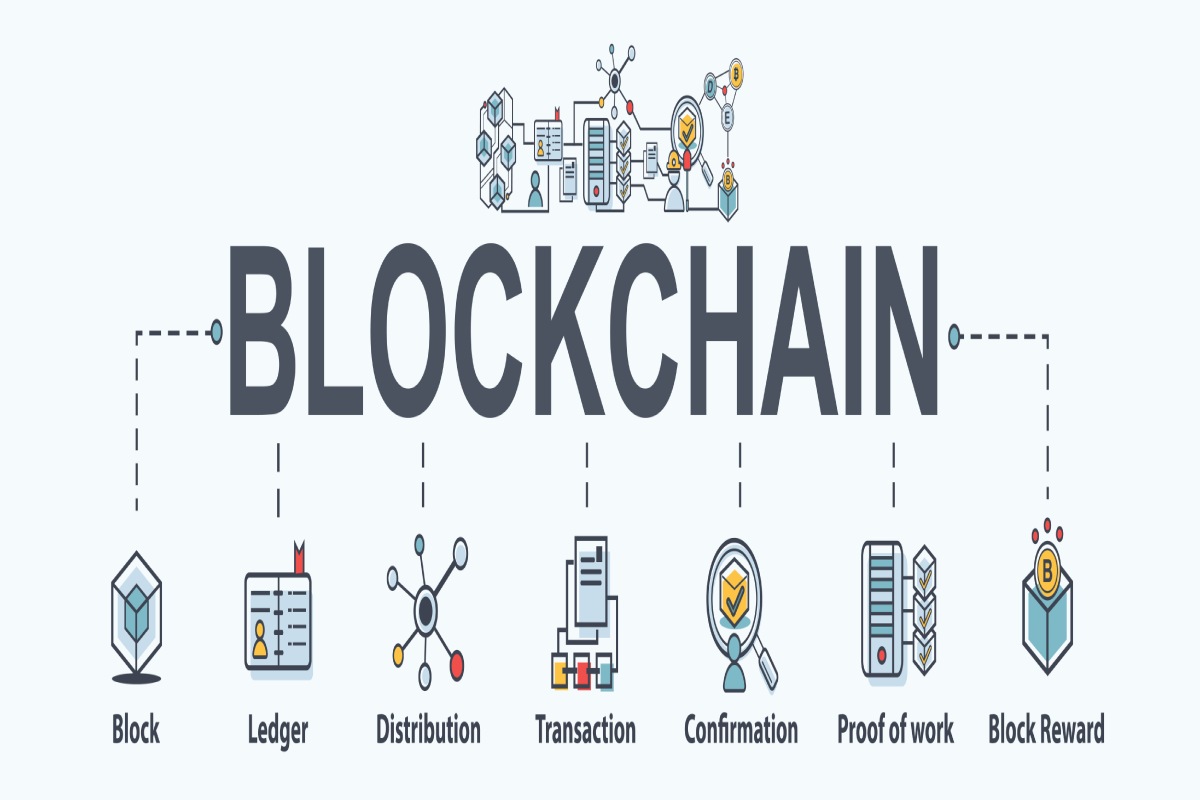
Ever heard of Bitcoin? Of course, you have! But what if I told you the tech behind it – blockchain – is about way more than just digital cash? It’s a game-changer, promising to shake up everything from how we track our groceries to how we vote. Let’s peel back the layers and discover the five essential things about this mind-bending technology.
Since its inception, blockchain technology has shown its potential in revolutionizing almost every sector of the modern economy.
So, what exactly is this technology that everyone’s excited about? Also called DLT(distributed ledger technology), blockchain refers to a set of systems involved in recording information. It’s a safe way to store your information as it makes it hard for unauthorized individuals to access or edit encoded. This feature makes the system lucid and unalterable, which is why the technology is used in Cardano, Bitcoin, and other popular cryptocurrencies.
If you consider yourself a newbie, it’s crucial for you to understand the different types of blockchain networks and how they work. Ensure you purchase your package from a reputable brokerage firm or cryptocurrency dealer to avoid being scammed.
This article has put together some of the things you should know about blockchain technology. But before that, you need to understand how blockchain technology works. Read on!
Table of Contents
What Even IS Blockchain, Anyway? (And Why Should I Care?)
It’s basically a super-secure digital notebook: Imagine a shared, tamper-proof record book where every entry (a “block”) is linked to the last one, and everyone on the network has a copy. No single boss, just everyone agreeing on what’s real.
The Big Three:
Decentralization
No single company or government owns it. Power to the people (or, at least, the network)! Think of it as a digital commons, a shared resource, governed not by a central authority, but by the collective.
Immutability
Once something’s recorded, it’s virtually impossible to change. Think digital superglue. This isn’t just about preventing fraud; it’s about creating a historical record that can be trusted implicitly.
Transparency & Security
Everyone can see what’s happening (though identities can be private), and hardcore cryptography keeps it safe. No sneaky changes allowed! Cryptography isn’t just about hiding information; it’s about verifying it, ensuring its integrity in a world increasingly saturated with misinformation.
More than just crypto: While it powers Bitcoin, blockchain is really about managing *any* data in a trustworthy way. We’re talking supply chains, digital identities, voting systems – the possibilities are as vast as our need for verifiable truth.
How Does Blockchain Work?
When the involved parties agree to conduct a transaction, this information is transferred to the nodes(computers) in a peer-to-peer network system. The nodes are involved in validating the shared information.
After confirming the transaction, it’s combined with other transactions to create a block. This block is then hashed. Each block is hashed in reference to the block that was created before it. Through this system, it becomes easier to assure the block position and harder for unauthorized personnel to edit the information.
After this, the latest block is incorporated into the blockchain and distributed to all its participants. That marks the end of the transaction.
Now that you have a better understanding of how blockchain technology operates, here are other important things you need to know.
1. No Intermediaries
In most circumstances, it’s challenging to conduct transactions with strangers. Of course, the reason for this is the absence of trust between the involved parties. On the other hand, the blockchain system creates the very trust it requires to function.
The parties are left to conduct transactions amongst themselves, getting rid of third-party involvement such as banks or brokers. Getting rid of intermediaries has made it easier to prove the ownership of a particular asset. Every block is linked to cryptography in the blockchain, making it hard to tamper with the recorded information.
Simply put, the technology guarantees the legitimacy of each transaction and protects it from forgery.
2. Programmable Money
Blockchain technology is employed in storing future records but not of what has already occurred. Organizations such as Ethereum Foundation utilize this technology to record and process ‘smart contracts’ managed by nodes involved in the blockchain using a pay-as-you-go concept.
The nodes will combine, store, and transfer information or any digital currency involved.The blockchain, therefore, assures the permanence of the contract stored.
3. It’s A Platform For Software Development
Using blockchain promotes an unprecedented level of trust and openness throughout its wide range of applications, whether in implementing digital currencies or in tackling global health crises. Although blockchain is a software technology at its primary level, it offers new tools and possibilities to many developers.
Blockchain can help you if you’re a developer to create advanced applications that are both decentralized and hard to edit, ushering in a completely new web and software type. Blockchain technology can also be used to develop the latest APIs (Application Programming Interface), which include transaction scripting language and data APIs. These technologies make it possible for different apps to interact with each other
4. Blockchain Is Decentralized And Reliable
As discussed earlier, blocks are distributed over a peer-to-peer network system. For this reason, there’s no central node where data is recorded. Every participant in a blockchain can access a copy of the blocks on their computers.
The absence of a centralized point of data storage guarantees the security and reliability of blocks as there’s no weak point for hackers to manipulate. In the case of a public blockchain, every participant is involved in managing the system, which means no individual has control over the blockchain as a whole.
5. There’s a public and a Private Blockchain
Although both systems work the same way, they differ on who’s allowed to participate. In a public system, anyone can join in transferring assets. The only disadvantage of this is that, due to many participants, verifications of transactions may take longer. An example includes Bitcoin.
Meanwhile, a private blockchain is managed by one body that determines who’s allowed to participate. The body works with a blockchain architect to come up with rules and regulations to control the transactions.It takes less time to verify a transaction in a private blockchain due to the restricted number of participants.
What’s Next? Glimpses into Blockchain’s Future
- Greener, Leaner, Faster: The push for sustainable, energy-efficient blockchains (like Proof-of-Stake) is huge. Plus, new tech like Layer 2 solutions are making networks way quicker. These advancements are crucial for scaling blockchain technology to meet the demands of mainstream adoption.
- Connecting the Dots: Interoperability is a major focus, with cross-chain solutions allowing different blockchains to finally chat and share data. The ability of different blockchains to seamlessly communicate and share data will foster innovation.
- DeFi 2.0 & Real-World Assets: Expect more sophisticated, regulated decentralized finance and the “tokenization” of everything from real estate to art, making fractional ownership a reality. Tokenizing real-world assets has the potential to unlock new forms of investment and liquidity.
- AI’s New Best Friend: Blockchain is teaming up with AI to create super-secure, transparent, and automated systems for everything. The synergy between blockchain and AI could revolutionize various industries.
- Governments Getting Serious: Central Bank Digital Currencies (CBDCs) are gaining traction, and clearer regulations are on the horizon, bringing more stability and institutional adoption. The introduction of CBDCs could transform the financial landscape.
- Beyond the Hype, Into the Mainstream: From secure supply chains to digital identity, blockchain-as-a-service (BaaS) and Web3 are making it easier for businesses and everyday users to jump on board. Lowering the barriers to entry is essential for fostering widespread adoption.
Conclusion
Before you employ blockchain technology, it’s crucial to understand how it works and how you can fully utilize it. In a blockchain transaction, there are no brokers involved and the system is reliable. There are many things you can learn from blockchain technology. Hopefully, this article has provided you with a good foundation on the critical things you must know in the world of blockchain.