
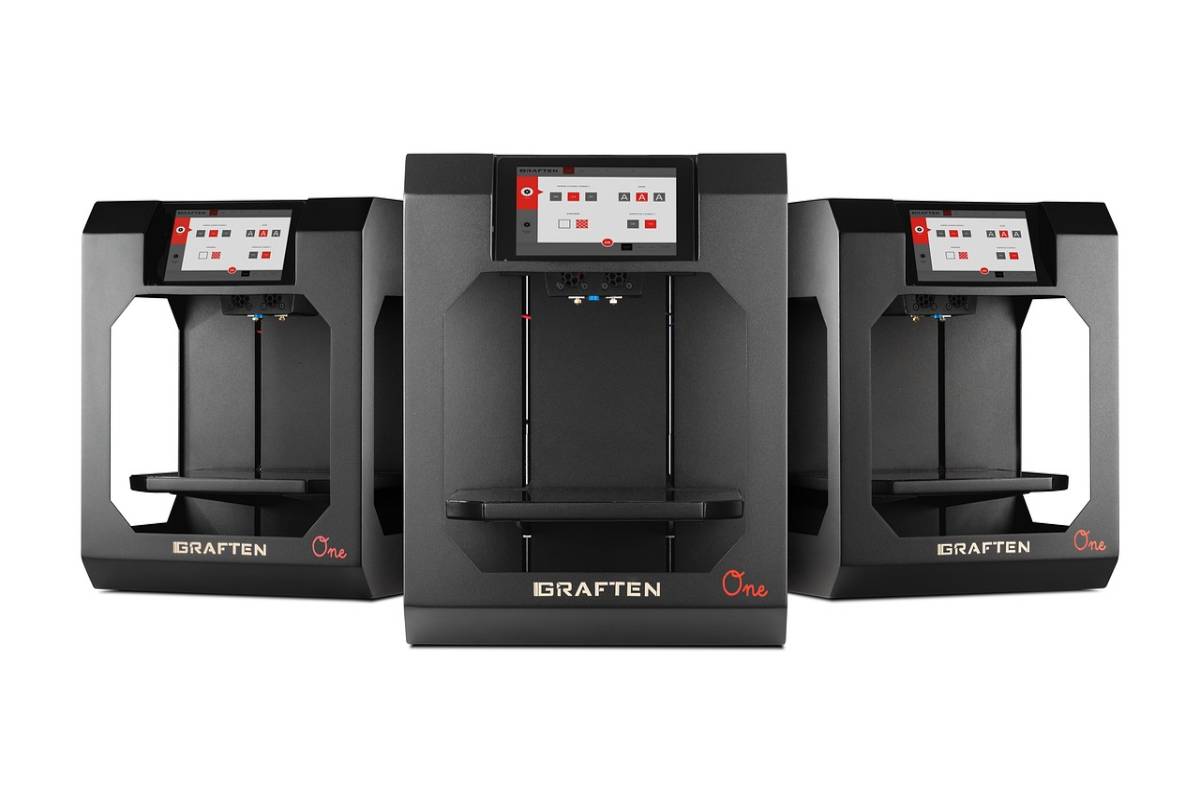
The truth is that 3D printers have become a phenomenon in recent years. They are not yet very widespread in our homes. Still, all technology lovers have shown interest in the possibility of giving life through one of these devices to any object that we can design by computer. But what many wonders what these printers can use for more than for the most geeks’ curiosity. And the truth is that it has more uses than we can imagine at first.
Table of Contents
I. Hook: From Science Fiction to Your Desktop (and Beyond!)
Recall those childhood fantasies of conjuring objects from thin air? Today, while not quite magic, 3D printing offers a taste of that wonder. Imagine needing a replacement knob for your stove, or perhaps a custom-fitted insole for your shoe – and simply printing it.
This, in essence, is the allure of 3D printing, or as it’s more formally known, additive manufacturing. Instead of carving away at a block of material, we’re building objects, layer upon infinitesimal layer, imbuing digital blueprints with physical reality.
The implications are staggering, poised to reshape industries and redefine the very nature of production. Prepare yourself, dear reader, as we embark on a journey into this fascinating realm.
II. A Blast from the Past: How We Got Here (Spoiler: It Wasn’t Overnight!)
The seeds of this revolution were sown long ago. While the technology as we know it is relatively young, the idea of additive manufacturing flickered in the minds of 19th-century inventors like Willeme and Blanther. They envisioned methods of replicating sculptures, hinting at a future where objects could be conjured rather than carved. But the real spark ignited in the 1980s.
IIn Japan, Dr. Hideo Kodama bravely experimented with photopolymer rapid prototyping, his efforts laying groundwork in Stereolithography (SLA). Yet, it was Chuck Hull, often hailed as the “father of 3D printing,” who truly set the stage.
His 1986 patent for SLA, and the subsequent founding of 3D Systems, marks a pivotal moment. Consider the humble .stl file – the language of 3D printers – a direct descendant of Hull’s vision, an enduring testament to his ingenuity. For a detailed technical timeline of these early breakthroughs, you can explore this complete history of 3D printing from UltiMaker.
Let us not forget Carl Deckard with his work in Selective Laser Sintering (SLS) and Scott Crump, the mind behind Fused Deposition Modeling (FDM). These titans, each with their unique approach, collectively sculpted the foundation of this transformative technology. The emergence of SLA, SLS and FDM as core processes is clearly summarized in Sculpteo’s history of 3D printing.
However, the widespread adoption of 3D printing remained constrained by patents. It was the expiration of key patents in the mid-2000s – the so-called “patent cliff” – that truly uncorked the genie.
This opened the floodgates for innovation, driving down costs and making 3D printers accessible to hobbyists and small businesses alike. Projects like RepRap, with its vision of a self-replicating printer, and MakerBot, which brought 3D printing to the masses, exemplified this new era of democratization.
Let us not forget Carl Deckard with his work in Selective Laser Sintering (SLS) and Scott Crump, the mind behind Fused Deposition Modeling (FDM). These titans, each with their unique approach, collectively sculpted the foundation of this transformative technology. The emergence of SLA, SLS and FDM as core processes is clearly summarized in Sculpteo’s history of 3D printing.
III. The Nitty-Gritty: So, How Does This Wizardry Actually Work?
Let’s demystify this seemingly magical process. It all begins with a digital blueprint – a 3D model of the object you wish to create. This model can be designed from scratch using CAD software, or captured from reality using a 3D scanner.
Next comes the crucial step of “slicing.” Imagine a digital chef meticulously slicing your 3D model into thousands of incredibly thin layers. This sliced data is then fed to the printer, providing precise instructions on how to build each individual layer.
The printer then embarks on its additive journey, depositing, curing, or fusing material one layer at a time. It’s like constructing a Lego masterpiece, but with far greater precision and complexity.
The range of materials that can be used in 3D printing is astonishing. Common plastics like PLA and ABS are popular choices for desktop printers. But the possibilities extend far beyond, encompassing liquid resins, metal powders, ceramics, and even biomaterials, each offering unique properties and opening doors to diverse applications.
Principal 3D Printing Methods:
FDM (Fused Deposition Modeling)
The workhorse of home 3D printing. It works by melting a plastic filament and extruding it through a nozzle, layer by layer, much like a sophisticated hot glue gun.
SLA (Stereolithography)
This process utilizes UV light to cure liquid resin, creating incredibly smooth and detailed prints. It’s favored when precision and surface finish are paramount.
SLS (Selective Laser Sintering)
A more industrial process, SLS employs lasers to fuse powdered materials, resulting in strong and durable parts suitable for demanding applications.
IV. The Good, the Bad, and the Debatable: Current Opinions and Controversies
The hype surrounding 3D printing is considerable, and for good reason. The creative freedom it unleashes is undeniable.
Want a custom phone case adorned with your own design? 3D printing makes it possible. The technology has also sparked an industrial revolution 2.0, with applications spanning healthcare (custom implants), aerospace (lighter components), and rapid prototyping. The potential for more sustainable practices through on-demand, localized production is also a compelling prospect.
However, we must not shy away from the ethical and practical challenges that accompany this transformative technology:
- Weaponization: The ability to print functional firearms raises serious ethical and regulatory questions. The implications for public safety are profound and demand careful consideration.
- IP Nightmares: The ease of replication enabled by 3D printing poses a significant threat to intellectual property. Copyright infringement and counterfeiting are already major concerns, and the problem is likely to escalate.
- Bio-Ethics 101: The prospect of printing organs raises fundamental ethical dilemmas. Questions of “playing God,” consent, and the potential for organ trafficking loom large.
- Safety First (Or Last?): The lack of clear regulations surrounding 3D-printed parts raises serious liability concerns. Who is responsible when a homemade component fails, potentially causing harm?
- Environmental Footprint: Despite claims of sustainability, the energy consumption and toxic emissions associated with certain 3D printing materials and processes are legitimate concerns.
- The Learning Curve: 3D printing still presents a significant barrier to entry for the average user. The technology can be daunting, requiring specialized knowledge and skills.
- Printed Food? Maybe Later: While the idea of 3D-printed meals is intriguing, our taste buds and culinary sensibilities may not yet be ready for this futuristic cuisine.
V. Peeking into the Crystal Ball: What’s Next for 3D Printing?
The future of 3D printing is poised to be even more transformative. We can anticipate advancements in several key areas:
Smarter, Faster, Stronger:
- Artificial intelligence assisting in design and process optimization.
- New materials: advanced metals, composites, “smart” polymers.
- Innovations like CLIP for significantly faster printing.
The Manufacturing Makeover:
Rise of decentralized “micro-factories.”
- Digital inventories and on-demand printing.
- Slashing supply chain costs and lead times.
Life-Changing Applications:
- Healthcare: Patient-specific organs, prosthetics, surgical models.
- Construction: 3D-printed homes, bridges, infrastructure (UAE’s 25% target by 2030).
- Space exploration: Printing rocket parts on long missions for repairs.
- Multi-material printing for unprecedented functionality.
VI. The Bottom Line: Shaping Our World, One Layer at a Time
From a niche technology to a global game-changer, 3D printing has come a long way. It holds incredible potential to transform industries, improve lives, and foster sustainable practices. However, we must also acknowledge the serious challenges that accompany this technology, including ethical concerns, regulatory gaps, and environmental impacts.
3D printing is not merely a passing trend; it represents a fundamental shift in how we create, build, and even heal. It is a technology that demands our attention, our critical thinking, and our responsible stewardship.
Now, dear reader, I pose a question to you:
What do you believe is the most exciting (or terrifying!) aspect of 3D printing’s future?